
Updated September 9, 2026.
Grass stains do not have to be permanent. For most washable clothes, the best starting method is to rinse the stain with cool water, pretreat it with an enzyme-containing liquid laundry detergent, gently work the detergent into the fibers, and wash according to the garment’s care label.
The most important rule is to check the stain before using the dryer. Dryer heat can make remaining green or brown discoloration much harder to remove.
Quick answer: To remove grass stains from clothes, rinse the back of the stain with cool water. Apply liquid laundry detergent containing enzymes and let it work for 10–15 minutes without allowing it to dry. Gently brush or rub the fabric together, rinse, and wash using the warmest water permitted by the care label. Air-dry and repeat the treatment if any discoloration remains.
What You Need to Remove a Grass Stain
Start with the simplest fabric-safe treatment. You may not need every product listed below.
- Cool running water
- Enzyme-containing liquid laundry detergent
- A soft toothbrush or laundry brush
- A clean white cloth
- Color-safe oxygen bleach for stubborn washable items
- Distilled white vinegar as an optional alternative treatment
Always read the garment’s care label and spot-test a treatment on an inconspicuous area. Wool, silk, leather, suede and garments marked “dry clean only” require specialized care.
Safety warning: Do not mix chlorine bleach with vinegar, ammonia, hydrogen peroxide or another cleaning product. Use one treatment at a time and rinse the fabric thoroughly before trying a different product.
How to Remove Grass Stains From Clothes Step by Step
1. Remove Loose Grass and Dirt
Gently shake, brush or scrape away loose grass and soil. Avoid aggressive dry scrubbing because it can push plant material deeper into the fabric.
2. Rinse the Stain From the Back
Turn the garment inside out and run cool water through the back of the stain. This helps push residue away from the fibers instead of forcing it farther into the fabric.
Use cool water for the initial rinse. Once the stain has been pretreated, wash the garment using the warmest temperature allowed by its care label.
3. Pretreat With Liquid Laundry Detergent
Apply enough liquid laundry detergent to cover the stained area. A detergent containing enzymes is a good first choice for washable cotton, denim, polyester and common fabric blends because it helps loosen organic residue trapped in the fibers.
Let the detergent remain on the stain for approximately 10–15 minutes. Do not allow the pretreatment to dry on the garment.
4. Work the Detergent Into the Fibers
Use your fingers, rub the fabric gently against itself, or use a soft toothbrush. Work from the outside of the stain toward the center to reduce spreading.
Avoid hard scrubbing on thin fabrics, stretch materials, printed clothing or areas showing signs of wear.
5. Rinse, Inspect and Wash
Rinse the treated area and check whether the green discoloration has lightened. Repeat the detergent treatment if necessary, and then wash the garment according to its care label.
For dark jeans and other dark-colored clothing, a cold wash can help limit fading. For durable light-colored clothing, use the warmest water allowed by the care instructions after pretreating.
6. Air-Dry Before Deciding the Stain Is Gone
Do not place the garment in a heated dryer until the stain has disappeared. Allow it to air-dry, inspect it in good light, and repeat the treatment if a green, yellow or brown shadow remains.
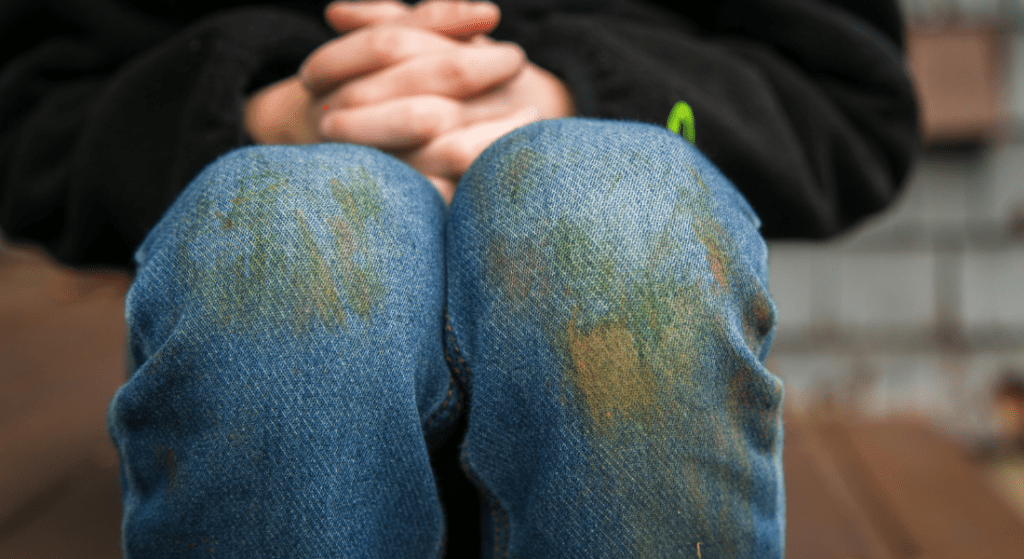
How to Remove Grass Stains From Jeans
Grass stains can be especially noticeable on jeans, and the treatment needs to remove the stain without fading or damaging the denim.
- Rinse the back of the stained denim with cool water.
- Apply enzyme-containing liquid laundry detergent.
- Let it work for 10–15 minutes without drying.
- Gently work the detergent into the denim with a soft brush.
- Rinse and repeat if green discoloration remains.
- Turn the jeans inside out and wash them in cold water.
- Air-dry the jeans and inspect them before using a dryer.
Spot-test dark or heavily dyed denim first. Avoid chlorine bleach on blue jeans, and do not apply hydrogen peroxide without testing because it can lighten the dye. If the care label permits oxygen bleach, use a color-safe product according to its directions for persistent stains.
How to Remove Grass Stains From Different Types of Pants
| Garment | Recommended Starting Method | Important Precaution |
|---|---|---|
| Blue or dark jeans | Enzyme detergent followed by a cold wash | Spot-test and avoid chlorine bleach |
| White pants | Enzyme detergent, followed by oxygen bleach if needed | Confirm that the care label permits bleaching |
| Khaki pants | Liquid detergent and gentle brushing | Test first because khaki dye may fade |
| Sweatpants | Liquid detergent and cool or warm water permitted by the label | Avoid aggressive brushing that can damage the surface |
| Polyester athletic pants | Liquid detergent followed by a normal care-label wash | Avoid high heat and fabric softener unless recommended |
| Wool or silk pants | A detergent specifically labeled safe for the fabric | Do not use an enzyme product unless it is approved for wool or silk |
How to Remove Grass Stains From White Clothes
White clothing can tolerate some treatments that may fade colored garments, but the care label still determines what is safe. If you are trying to remove grass stains from white clothes or white pants, start with detergent before moving to a stronger treatment.
- Rinse the back of the stain with cool water.
- Pretreat it with enzyme-containing liquid detergent for 10–15 minutes.
- Gently work the detergent into the fabric and rinse.
- If discoloration remains, soak the garment in color-safe oxygen bleach for the time and concentration stated on the product label.
- Wash according to the garment’s instructions and air-dry.
Three-percent hydrogen peroxide may help on certain washable white or very light fabrics, but it should be spot-tested first and rinsed out before another product is used.
Only use chlorine bleach when both the garment label and bleach instructions allow it. Never combine chlorine bleach with vinegar, ammonia, peroxide or another cleaner.
How to Remove Old or Set-In Grass Stains
An old grass stain—or one that has already been washed—may need several treatment cycles. Even a stain that has been through the dryer may improve, although heat can make removal more difficult.
- Rewet the stained area with cool water.
- Apply enzyme-containing liquid detergent and allow it to work for 15–30 minutes without drying.
- Gently brush the stain and rinse it thoroughly.
- If the garment is washable and colorfast, soak it in color-safe oxygen bleach according to the product label.
- Wash the garment following its care instructions.
- Air-dry and repeat rather than placing a visible stain back in the dryer.
Do not combine vinegar and baking soda in the same treatment. They react with each other and reduce the useful acidity and alkalinity of the separate products. If you try either option, use it separately and rinse thoroughly before moving to another treatment.
For broader guidance covering stains that survived washing or drying, see our complete guide to old and set-in stains.
What Is the Best Grass Stain Remover?
For most machine-washable clothes, an enzyme-containing liquid laundry detergent is the best first treatment. It is easy to apply directly, works well on organic residue and can be followed by the garment’s normal wash cycle.
If detergent alone is not enough, choose an escalation method based on the fabric:
- Color-safe oxygen bleach: Useful for stubborn stains on washable, colorfast clothing. Follow the product label.
- Distilled white vinegar: An optional treatment for some washable fabrics. Dilute it with water, spot-test and rinse before washing.
- Baking soda: A mild paste may help loosen surface residue, but it should not replace detergent pretreatment.
- Three-percent hydrogen peroxide: Consider only for white or light-colored washable fabrics after spot-testing.
- Rubbing alcohol: It may affect fabric dyes and finishes, so it should be used cautiously and tested first.
- Chlorine bleach: Reserve for bleach-safe white garments and follow every label warning.
Using more products does not necessarily produce a better result. Begin with detergent, rinse between treatments, and avoid creating homemade chemical mixtures.
If you are considering peroxide, review our guide to the uses and precautions of hydrogen peroxide in laundry first.
How to Remove Grass Stains From Shoes
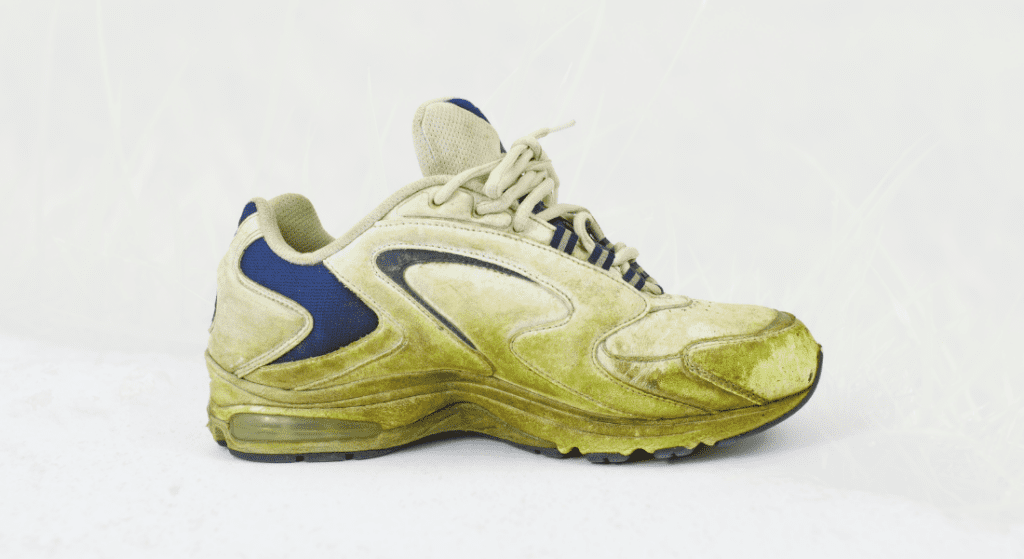
Shoes require a different approach because soaking can damage adhesives, cushioning, leather and shape.
- Check the manufacturer’s cleaning instructions.
- Remove loose dirt with a dry, soft brush.
- For washable fabric or canvas uppers, apply a small amount of diluted liquid detergent with a white cloth or soft brush.
- Blot with a separate damp cloth to remove detergent and loosened residue.
- Allow the shoes to air-dry away from direct heat.
Do not soak leather or suede shoes. Use a cleaning product made for the specific material or consult a shoe-care professional.
Common Grass-Stain Removal Mistakes
- Putting the garment in the dryer too soon: Heat can make remaining discoloration harder to remove.
- Scrubbing aggressively: This can damage fibers, spread the stain or fade the fabric.
- Ignoring the care label: A method suitable for cotton may damage wool, silk, leather or delicate finishes.
- Using chlorine bleach on colored clothing: It may permanently remove or change the garment’s dye.
- Mixing cleaning products: Combining chemicals can reduce effectiveness or create dangerous fumes.
- Skipping a spot test: Even color-safe products may affect certain dyes and finishes.
- Treating every green mark as grass: Dirt, paint, dye transfer and food coloring may require different treatments.
When to Use a Laundry Professional
Consider professional help when the garment is valuable, delicate, marked dry-clean-only, losing color or still stained after several careful attempts. Explain what caused the stain, which products you have already used and whether the garment has been through a heated dryer.
If you are in Clarksville, Tennessee, you can bring everyday washable laundry to The Dutchman’s Laundry drop-off laundry service. Point out the stained area when dropping off the garment so the team can assess it. Complete removal cannot be guaranteed, particularly when a stain has aged, reacted with another product or been exposed to dryer heat.
Frequently Asked Questions About Grass Stains
Can Grass Stains Come Out of Jeans?
Yes. Rinse the denim from the back with cool water, pretreat it with enzyme-containing liquid detergent, gently brush it, wash the jeans inside out and air-dry. Dark denim should be spot-tested before using any stronger stain remover.
Should I Use Hot or Cold Water for Grass Stains?
Use cool water for the initial rinse. After pretreating, wash the garment using the warmest water permitted by its care label. For dark denim and clothing prone to fading, cold water is usually the safer washing choice.
Does Laundry Detergent Remove Grass Stains?
Liquid laundry detergent containing enzymes is the best first treatment for most washable clothes. Apply it directly, let it work for 10–15 minutes, gently work it into the stain, rinse and then wash the garment.
How Do You Get Grass Stains Out of Clothes That Have Already Been Washed?
Rewet the stain, repeat an enzyme-detergent pretreatment and use a color-safe oxygen-bleach soak if the care label permits it. Wash and air-dry the garment. Several rounds may be needed if it has also been through a dryer.
How Do You Get Grass Stains Out of White Pants?
Pretreat white pants with enzyme-containing liquid detergent. If the stain remains and the fabric is washable, soak it in oxygen bleach according to the label. Use chlorine bleach only when the garment is specifically labeled bleach-safe.
Can Vinegar and Baking Soda Remove Grass Stains?
They may help in separate treatments, but they should not be mixed together. Their acid-and-base reaction neutralizes much of their cleaning action. Detergent is the more dependable first treatment for washable clothes.
Are Grass Stains Permanent?
Not necessarily. Fresh grass stains often respond well to prompt pretreatment, while old or dryer-set stains may require repeated treatment. Some discoloration can become permanent if the fabric is damaged, the dye changes or the stain has been exposed to repeated heat.
Grass-Stain Removal Checklist
- Check the garment’s care label.
- Remove loose grass and dirt.
- Rinse from the back with cool water.
- Pretreat with enzyme-containing liquid detergent.
- Gently work the treatment into the fabric.
- Wash according to the care label.
- Air-dry and inspect before using heat.
- Repeat or escalate to color-safe oxygen bleach when appropriate.
Prompt treatment provides the best chance of removing grass stains, but patience matters just as much. Use a fabric-appropriate method, avoid mixing products and keep the garment out of the dryer until the stain is gone.