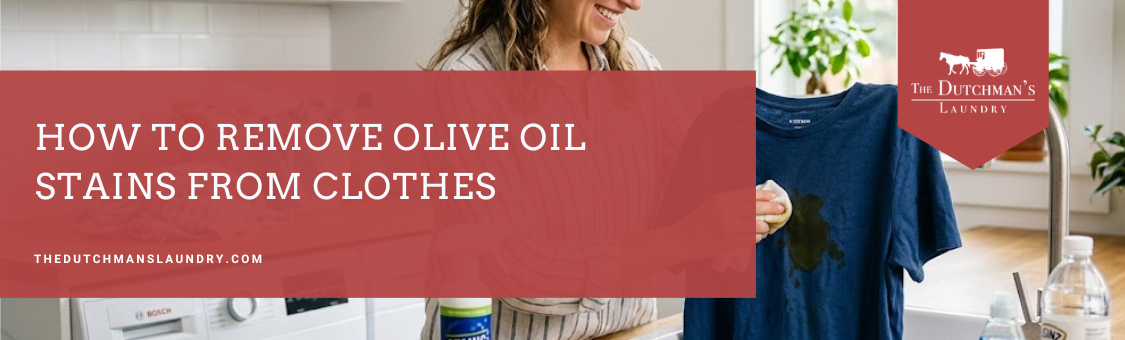
An olive oil stain can turn a favorite shirt, pair of pants, or tablecloth into a frustrating laundry problem. Because olive oil is oil-based and naturally resistant to water, simply washing stained clothing may not be enough to get the mark out. The longer an oil stain remains untreated, the more likely it is to become set into the fabric.
Fortunately, you don’t need expensive equipment or complicated techniques to tackle most oil stains on clothes. Everyday household products such as dish soap and baking soda can often help loosen oil and grease before a normal wash.
This guide explains how to get olive oil out of clothes, how to remove grease, what to do about set-in stains, and which mistakes can make stains harder to remove. Whether you’re dealing with cooking oil, a fresh spill, or an older mark, these methods can help you approach stain removal safely and effectively.
Table of Contents
ToggleWhy Are Olive Oil Stains So Difficult to Get Out of Clothes?
Olive oil can be particularly challenging because it is oil-based. Unlike water-based spills, an oil stain does not simply dissolve when you rinse it with water. Instead, the oil can cling to the fibers of the fabric and create a dark or greasy-looking patch.
When an oil stain is fresh, there is usually a better opportunity to remove it before it penetrates deeply. If you immediately blot away excess oil, you reduce the amount that needs to be treated later. Rubbing aggressively, however, can spread the stain over a larger area.
As time passes, the oil can become more firmly set into the fabric. Heat can make the situation worse, which is why putting stained clothing directly into the dryer is generally a bad idea. Before beginning stain removal, check the garment’s care label and consider the fabric involved.
The good news is that most household oil stains can be treated with a method designed to break down the greasy material rather than simply trying to wash it away with water.
How Can You Get Olive Oil Out of Clothes When the Stain Is Fresh?
The first step is to deal with excess oil. If there is a spill or drip, use a paper towel or another absorbent material to blot the area gently. Do not scrub, because rubbing can push the oil deeper into the fibers of the fabric.
Once you have removed as much excess oil as possible, apply an absorbent powder such as baking soda. Leave it on the affected area for several minutes so it can help loosen and absorb some of the oil. Brush away the powder gently afterward.
Next, apply a small amount of dish soap directly onto the stain. Dish soap is designed to deal with grease and can be useful when treating an oil-based laundry stain. Gently work the product into the affected area, then let it sit for a short period according to the product and fabric-care requirements.
Rinse with warm water if the care instructions permit it. Inspect the garment before washing it normally. If you can still see the stain, repeat the process rather than putting the garment into the dryer.
Can Baking Soda and Dish Soap Remove an Olive Oil Stain?
Baking soda and dish soap are popular household options because they serve different purposes. Baking soda can absorb some of the excess oil, while dish soap can help break down greasy material so it can be lifted from the fabric.
To use this approach, start by blotting the stain with a paper towel. Sprinkle baking soda over the affected area and allow it to sit. Once the powder has had time to absorb some of the oil, gently remove it.
Then apply dish soap to the remaining grease stain. Work it into the fabric carefully without aggressively scrubbing. Let it sit long enough to work on the oil, then rinse thoroughly.
Before treating expensive, delicate, or brightly colored clothing, test the method on an inconspicuous area. Different fibers and dyes respond differently to cleaning products. If the garment has special care instructions, follow them rather than relying on a generic cleaning method.
This combination can be especially useful for fresh greasy stains, but it may require repeated treatment when an oil stain has already become set-in.
What Should You Do About Set-In Oil Stains on Clothes?
Set-in stains require more patience because the oil has had more time to penetrate the material. If you are trying to remove olive oil stains that have already been washed or dried, begin by checking the fabric care label.
Apply a small amount of dish soap to the affected area and gently work it into the fabric. Allow it to sit before rinsing. For a particularly stubborn stain, an appropriate stain remover may be helpful, provided it is compatible with the garment.
Do not assume that repeated washing alone will solve the problem. A standard wash cycle may not be enough to break down oil that has become embedded in the fabric. Instead, pretreat the area before washing the garment.
After treatment, wash the item according to its care instructions and inspect it while it is still wet. If the stain remains visible, repeat the process. Avoid heat until the stain is completely gone because heat can help set the oil permanently.
How Do You Remove Grease and Cooking Oil From Clothes?
Grease and cooking oil can leave similar marks because both are oil-based. Whether the source is olive oil, food grease, or another kitchen spill, the basic principle is to absorb excess oil first and then use a product that can help break down the greasy material.
Start by blotting the stain rather than rubbing it. A clean white cloth or paper towel can absorb excess oil without spreading it. Next, use baking soda if appropriate for the fabric to help absorb the remaining surface oil.
After removing the powder, apply dish soap to the grease stain. Gently work it into the affected fibers and allow it to sit. Rinse with warm water when permitted by the care instructions.
For persistent oil stains from clothes, you may need to repeat the treatment. Avoid placing the garment in the dryer until you are confident the mark has been removed. The same basic approach can also work for many food-related greasy stains, although unusual substances may require specialized products.
Does Vinegar Help Remove Oil Stains Out of Clothes?
Vinegar is frequently suggested as a home remedy for laundry problems, but it is not necessarily the best first choice for an oil stain. Because oil and vinegar have different chemical properties, vinegar alone is not particularly effective at dissolving an oil-based mark.
If you’re trying to remove cooking oil, focus first on absorbing excess oil and using a grease-cutting product. Dish soap is often more directly suited to this task.
Vinegar can have other laundry uses, but it should not replace proper pretreatment. If you decide to use white vinegar as part of a broader laundry routine, follow the garment and product care instructions and never mix household cleaning chemicals indiscriminately.
For an oil stain, the priority is to break down and remove the oil rather than simply rinse the fabric with another liquid.
What Is the Best Way to Remove Oil Stains on Clothes Without Damaging Fabric?
Effective stain removal always needs to be balanced with fabric care. A method that works well on a sturdy cotton garment may not be appropriate for silk, wool, leather, or another delicate material.
Begin by reading the fabric care label. Check whether the garment can be washed, which temperatures are permitted, and whether any cleaning products should be avoided. When in doubt, test your chosen solution on an inconspicuous area.
For washable fabrics, start with the gentlest effective treatment. Blot the stain, absorb excess oil, apply a suitable product, and rinse. Avoid vigorous brushing because aggressive friction can damage fibers or spread the stain.
If the item is valuable or particularly delicate, professional cleaning may be safer. The goal of stain removal isn’t simply to remove the mark; it is to remove the stain without compromising the fabric.
Can You Remove Oil From Clothes After They Have Been Through the Dryer?
Removing oil out of clothes after drying can be more difficult, but it is not necessarily impossible. Heat can cause an oil stain to become more firmly set into the fabric, making subsequent stain removal more challenging.
Start by examining the garment and identifying the stained area. Apply a grease-cutting treatment such as dish soap if it is safe for the material. Let it sit, then rinse and wash the garment according to the care instructions.
After washing, inspect the item before using the dryer again. If the stain is still visible, repeat the treatment. It may take several attempts to remove a stubborn set-in stain.
Do not use increasingly harsh chemicals simply because the first treatment did not work. Some fabrics are easily damaged, and aggressive cleaning can leave a permanent mark even if the original oil is eventually removed.
How Can You Remove Set-In Stains From White Clothes?
Oil stains can be particularly noticeable on white clothing. Fortunately, the absence of dark dye can make some cleaning treatments easier to assess because you can clearly see whether the stain is disappearing.
Begin by removing any excess oil and pretreating the area. Baking soda can help absorb surface oil, while dish soap can help break down the greasy material. After treatment, rinse and wash according to the garment’s care instructions.
If the mark remains, repeat the process rather than immediately reaching for a strong chemical. For washable white garments, a product specifically formulated for stain removal may also be appropriate.
Always check the fabric before applying a new product. Even white fabric can become damaged or discolored by unsuitable treatments. The safest approach is to use a product designed for the material and follow its directions carefully.
What Mistakes Make Stains on Clothes Harder to Remove?
One of the biggest mistakes is rubbing an oil stain aggressively. Scrubbing can spread the oil and push it deeper into the fibers. Instead, blot the stain gently and work from the outside toward the center when appropriate.
Another mistake is adding heat too early. If you wash a garment and immediately dry it while an oil stain is still visible, the heat can make the remaining mark more difficult to remove. Air dry the item while you assess the results.
Using too much cleaning product can also create problems. More product does not necessarily mean better stain removal, and some substances can leave their own residue.
Finally, avoid ignoring the stain. The sooner you address a fresh spill, the more likely you are to prevent it from becoming one of the toughest stains to remove. Quick action, appropriate pretreatment, and careful washing are the foundations of successful stain removal.
How Can You Prevent Olive Oil Stains and Grease Stains in the Future?
The easiest stain to remove is the one you never have to treat. When cooking with olive oil or using a fryer, take simple precautions to reduce splashes and spills. Wearing an apron can help protect favorite clothes from cooking oil.
If a spill happens, act quickly. Blot the area with a paper towel and avoid rubbing it. Removing excess oil immediately can significantly reduce the amount that reaches the deeper fibers.
For laundry, inspect clothes before washing them. If you see an oil stain, pretreat it instead of assuming the washing machine will remove it automatically. Treating a stain before washing gives the cleaning product a better opportunity to work on the oil.
You should also avoid putting clothing with visible stains into the dryer. Check the garment after washing, and repeat the treatment if necessary. These simple cleaning hacks can help protect your favorite clothes and reduce the frustration of dealing with persistent stains.
Final Thoughts on Removing Oil Stains From Clothes
Oil-based marks may seem tricky to remove, but the right approach can make a major difference. Whether you’re dealing with an olive oil stain, a grease stain, or another cooking-related spill, the basic strategy is consistent: remove excess oil, pretreat the area, use an appropriate grease-cutting product, rinse carefully, and inspect the garment before applying heat.
The sooner you address a stain, the easier the process is likely to be. Older set-in stains may require patience and repeated treatment, but they should not automatically be considered impossible to remove.
Most importantly, always prioritize the garment’s care instructions. Different materials respond differently to cleaning products and temperatures, so successful stain removal depends on both the right technique and appropriate fabric care.
Dealing With an Oil Stain? Don’t Wash It Just Yet
Oil and grease stains can be stubborn, especially if you toss the clothing straight into the washer or dryer. The good news is that you can often treat a fresh oil stain before washing it. Our guide explains what to do when cooking oil, grease, butter, or salad dressing gets on your clothes, including simple ways to absorb the oil and pretreat the stain without damaging the fabric.
Read our blog How to Remove Oil Stains From Clothes Without Washing
Key Things to Remember
- Act quickly when an oil stain occurs and blot away excess oil instead of rubbing.
- Use baking soda to help absorb surface oil when it is appropriate for the fabric.
- Dish soap can help break down grease and oil before washing.
- Always check the garment’s care label before starting stain removal.
- Do not put an oil-stained garment in the dryer until you know the stain is gone.
- Set-in stains may require repeated pretreatment and washing.
- Test cleaning solutions on an inconspicuous area before treating delicate or valuable clothing.
- Vinegar is not usually the first choice for breaking down an oil-based stain.
- Inspect clothing after washing and repeat the process if necessary.
- Taking precautions while cooking can help prevent olive oil and grease stains in the first place.