Updated August 15, 2026
Hydrogen peroxide can help treat certain laundry stains and brighten compatible white fabrics, but it must be used carefully. It is an oxidizing bleach, which means it can also fade colored clothing when the dye is not stable.
This guide explains how to use standard 3% household hydrogen peroxide in laundry, including how much to apply, how long to leave it on clothes, whether it can go in a washing machine, and which cleaning chemicals should never be mixed with it.
Quick safety rule: Check the garment care label, test colored fabric in a hidden area, use only enough peroxide to dampen the stain, rinse thoroughly, and never combine it with other household cleaning chemicals.
Hydrogen Peroxide in Laundry: Answers at a Glance
| Question | Short Answer |
|---|---|
| Can you use hydrogen peroxide on clothes? | Yes, standard 3% peroxide may be used on some washable, colorfast fabrics. |
| Does hydrogen peroxide bleach clothes? | Yes. It can lighten stains, white fabric, and unstable dyes. |
| Is it safe for colored clothing? | Sometimes, but only after the garment passes a hidden colorfastness test. |
| How much should you use? | For a spot, use only enough to dampen the affected area. There is no universal whole-load amount. |
| How long should it remain on clothes? | Begin with approximately 1–5 minutes, monitor the fabric, and rinse. Do not use an overnight soak as the default. |
| Can it be mixed with detergent? | Use detergent after rinsing the treated area. Do not create homemade chemical mixtures. |
| Can it go in the washing machine? | Only when the laundry-product label and washing-machine manual permit it. |
| Does it disinfect laundry? | Do not assume ordinary 3% peroxide automatically disinfects an entire wash load. |
What Does Hydrogen Peroxide Do in Laundry?
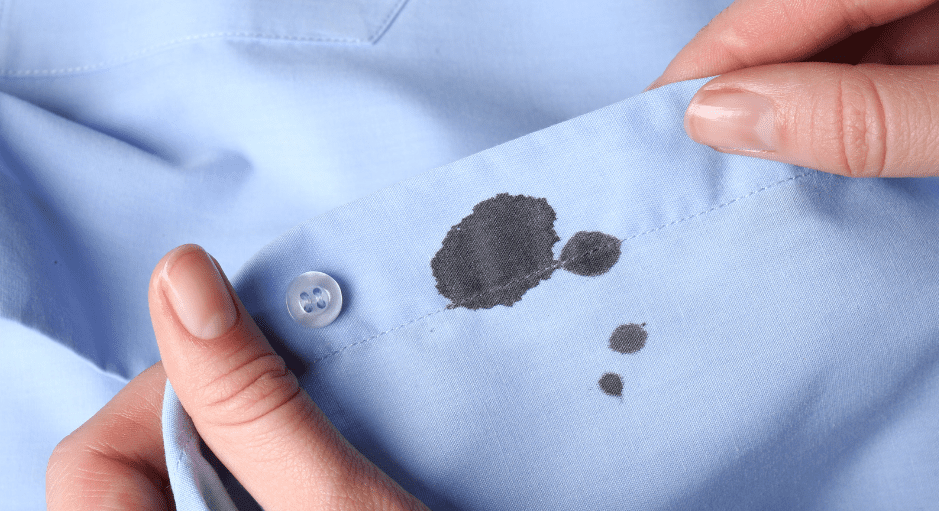
Hydrogen peroxide is an oxidizing agent. Oxidation can break down or lighten certain stain compounds, making them easier to rinse and wash away. This is why peroxide-related ingredients appear in some oxygen bleaches and commercial stain removers.
When used appropriately, 3% hydrogen peroxide may help with:
- Some fresh blood stains
- Some perspiration and yellow discoloration
- Residual food and drink discoloration
- Brightening certain washable white fabrics
- Spot treatment when chlorine bleach is unsuitable
It is not a universal stain remover. Grease, rust, detergent residue, dye transfer, and chemical damage require different treatment methods.
Use Only 3% Household Hydrogen Peroxide on Clothing
Laundry advice involving household hydrogen peroxide generally refers to the standard 3% solution sold for home use.
Do not substitute hair developer, industrial peroxide, “food-grade” peroxide, or another high-concentration product. Stronger peroxide can cause more serious skin and eye injuries and increases the risk of fabric discoloration or damage.
Keep peroxide in its original container, follow its safety instructions, and store it away from children and pets. For further concentration and exposure information, consult Poison Control’s hydrogen peroxide guidance.
Does Hydrogen Peroxide Bleach Clothes?
Yes, hydrogen peroxide can bleach clothes.
That bleaching action can help lighten some stains and brighten compatible white fabrics. However, the same reaction can remove or alter the color of dyed fabric.
The likelihood of fading depends on:
- The fabric’s dye and colorfastness
- The peroxide concentration
- The amount applied
- The length of contact
- The fabric’s condition
- Previous chemical treatments
Using 3% peroxide does not guarantee that a colored garment will be safe. Dark clothes, bright colors, printed fabrics, and older garments should always be tested first.
How to Test Hydrogen Peroxide on Colored Clothes
- Read the garment care label.
- Choose an inconspicuous area, such as an inside seam or hem.
- Apply one or two drops of 3% hydrogen peroxide.
- Wait approximately one minute while watching for a color change.
- Blot and rinse the test area.
- Do not continue if the fabric fades, lightens, transfers dye, or changes texture.
For additional color-preservation guidance, see our laundry tips for keeping colors bright.
How to Use Hydrogen Peroxide on a Laundry Stain
The appropriate treatment depends on the fabric and what caused the stain. For a washable garment that permits stain treatment, use the following cautious method:
- Check the care label. Do not use peroxide if the garment instructions prohibit bleaching or require professional cleaning.
- Remove excess material. Blot liquids and gently lift away solids without rubbing the stain deeper into the fibers.
- Test the fabric. Test colored garments in a hidden area before treating the visible stain.
- Apply a small amount. Use only enough 3% peroxide to dampen the affected area. Do not saturate the entire garment for a small spot.
- Allow a short contact time. Start with approximately 1–5 minutes and monitor the fabric continuously.
- Rinse thoroughly. Flush the treated area with water rather than allowing peroxide to remain in the fibers indefinitely.
- Apply detergent if appropriate. Pretreat or wash with regular laundry detergent according to the care label.
- Check before drying. Do not place the item in a hot dryer until the stain is gone. Dryer heat can make some remaining stains harder to remove.
If the stain remains, repeat a gentle treatment only if the fabric has not changed. Do not increase the peroxide concentration to force a faster result.
How Much Hydrogen Peroxide Should You Use for Laundry?
For a small stain, use only enough 3% hydrogen peroxide to dampen the affected fibers. Applying more does not necessarily improve stain removal and can increase the risk of discoloration.
There is no responsible universal whole-load measurement for every washer, fabric, and peroxide product. Advice such as “add one cup to every load” ignores differences in washer design, water volume, fabric care instructions, and product concentration.
For whole-load whitening or soaking, choose an oxygen-bleach or peroxide-based laundry product that provides specific dosage instructions. Follow both the product label and the washing-machine manual.
How Long Should Clothes Soak in Hydrogen Peroxide?
There is no single soaking time that is safe for every fabric.
For localized treatment with 3% peroxide, begin with approximately 1–5 minutes, inspect the fabric, and rinse. A stubborn stain may require another short treatment, but longer exposure is not automatically better.
Do not use an overnight hydrogen peroxide soak as a default method, especially on colored clothing. Extended exposure can increase the chance of uneven fading or fabric damage.
If an entire garment requires soaking, use a laundry product specifically labeled for that purpose and follow its stated dilution and contact time.
Can You Put Hydrogen Peroxide in a Washing Machine?
Do not automatically pour ordinary drugstore hydrogen peroxide into the detergent, fabric-softener, or chlorine-bleach dispenser.
Washing machines use different dispenser systems, seals, hoses, materials, and operating instructions. Adding a chemical to the wrong compartment may damage the machine or interfere with the wash cycle.
If you are using a peroxide-based product specifically labeled as a laundry additive:
- Follow the dosage and placement instructions on the product label.
- Check the washing-machine manual.
- Do not combine it with chlorine bleach or another cleaning chemical.
When using ordinary 3% household peroxide on a small stain, treating and rinsing the spot before washing is safer than guessing where to add it to the machine.
Can You Mix Hydrogen Peroxide With Laundry Detergent?
You can wash a garment with normal laundry detergent after an appropriate peroxide pretreatment, but avoid premixing household peroxide and detergent in a bottle, bowl, or dispenser.
A safer sequence is:
- Treat the compatible stain with a small amount of 3% hydrogen peroxide.
- Allow a short contact time.
- Rinse the treated area thoroughly.
- Launder with detergent according to the garment care label.
If a commercially formulated laundry product contains peroxide or specifically instructs you to use it with detergent, follow that product’s directions.
What Should Never Be Mixed With Hydrogen Peroxide?
Do not directly mix hydrogen peroxide with:
- Chlorine bleach
- Vinegar or acidic cleaners
- Ammonia-based cleaners
- Unknown stain-removal chemicals
- Multiple homemade cleaning solutions
Use one treatment at a time and rinse the fabric thoroughly before using another product. The CDC specifically advises against mixing hydrogen peroxide with bleach.
Using Hydrogen Peroxide on Common Laundry Stains
Fresh Blood Stains
Rinse a blood stain with cool water first. Hot water can make a protein stain more difficult to remove.
- Wear gloves when handling someone else’s blood.
- Rinse the stain from the back with cool water.
- Test colored fabric in a hidden area.
- Apply a few drops of 3% hydrogen peroxide to the remaining stain.
- Allow it to work for approximately 1–3 minutes.
- Rinse thoroughly with cool water.
- Apply detergent if needed and wash according to the care label.
- Check the stain before drying.
For complete instructions for fresh, dried, or already-washed blood stains on clothing, see our guide to removing blood stains from clothes.
Sweat and Yellow Stains
Hydrogen peroxide may help lighten some perspiration-related discoloration on washable, peroxide-compatible fabric.
Start with laundry detergent because the mark may include body oils and deodorant buildup. If discoloration remains, test the fabric and apply a small amount of 3% peroxide before rinsing and laundering.
Not every yellow or pale mark is a sweat stain. Detergent residue, hard-water deposits, bleach damage, and fabric wear can produce similar discoloration. If the problem appears after washing, see our guide to removing white stains and laundry residue.
Food and Drink Stains
Peroxide may help with residual color from certain food and beverage stains, but it usually should not be the first treatment.
- Remove excess food or liquid.
- Rinse or blot according to the stain type.
- Pretreat with laundry detergent or an appropriate stain remover.
- Rinse the treated area.
- If color remains, test the fabric and apply a small amount of 3% peroxide.
- Rinse again and launder.
For stain-specific instructions, see our guides to pizza sauce stains, BBQ sauce stains, and red wine stains.
Can Hydrogen Peroxide Whiten Clothes?
Hydrogen peroxide may brighten certain washable white fabrics and lighten compatible stains. However, white fabric can still contain finishes, prints, elastic, decorative stitching, or fibers that are sensitive to bleaching agents.
Check the care label before treatment. For a small stain, apply only enough 3% peroxide to treat the affected area, rinse, and wash normally.
For an entire load of dingy white clothing, use an oxygen-bleach or peroxide-based laundry product with clear dosage instructions rather than relying on a universal homemade measurement.
Does Hydrogen Peroxide Disinfect Laundry?
Hydrogen peroxide can have antimicrobial activity under the correct concentration, contact time, and conditions. However, adding ordinary 3% peroxide to a washing machine does not automatically mean the entire load has been sanitized or disinfected.
Cleaning, stain removal, sanitizing, and disinfecting are different processes. If disinfection is required, use a product specifically registered and labeled for the intended laundry application and follow its required dosage and contact time.
The EPA’s disinfectant guidance explains why disinfecting claims depend on using a registered product according to its label.
Does Hydrogen Peroxide Damage Washing Machines?
Compatibility depends on the machine and how the chemical is used. A blanket statement that peroxide is safe for every washer, dispenser, hose, or seal would be unreliable.
Before adding any peroxide-containing product directly to a washer:
- Check the washing-machine manual.
- Follow the laundry product’s placement and dosage instructions.
- Never use concentrated or industrial peroxide.
- Do not combine it with chlorine bleach or another cleaner.
For a small stain, external spot treatment followed by thorough rinsing avoids unnecessary chemical exposure inside the washer.
Hydrogen Peroxide vs. Oxygen Bleach and Chlorine Bleach
| Product | Important Consideration |
|---|---|
| 3% household hydrogen peroxide | Useful for cautious spot treatment, but it has no universal whole-load dosage and may fade dyes. |
| Oxygen-bleach laundry product | Designed for laundry and normally provides fabric, dosage, soaking, and machine instructions. |
| Chlorine bleach | A stronger bleaching chemical that can remove color and damage incompatible fibers. |
None of these products is safe for every fabric. Always check the garment care label and product instructions. Never mix hydrogen peroxide, oxygen bleach, and chlorine bleach together.
When Hydrogen Peroxide Is Not the Best Treatment
Select the treatment based on the stain rather than applying peroxide to every mark.
- Oil and grease: Start with detergent or an appropriate degreasing pretreatment.
- Rust: Use a treatment intended for iron-related stains. See our guide to removing rust stains from clothes.
- Detergent residue: Correct the detergent amount and rinse the fabric rather than adding another oxidizing chemical.
- Dye transfer: Use a product and method intended for transferred dye.
- Bleach damage: Peroxide cannot restore dye that has already been removed.
- Delicate or dry-clean-only garments: Follow the care label or consult a professional.
If the stain is unknown, start with our guide to removing stains without chlorine bleach.
Can You Use Hydrogen Peroxide on Army ACU or OCP Uniforms?
Army uniforms and issued gear should be cleaned according to the garment or equipment instructions. Avoid experimental mixtures that could affect camouflage dyes, insect-repellent treatments, flame-resistant properties, or identification markings.
For uniform-specific instructions, see our ACU and OCP washing guide.
For eligible field gear and OCIE, learn about our TA-50 and CIF gear cleaning service near Fort Campbell.
Hydrogen Peroxide Laundry Safety Checklist
- Use only standard 3% household hydrogen peroxide.
- Check the garment care label.
- Test colored fabrics in a hidden area.
- Use only enough peroxide to dampen the stain.
- Begin with a short contact time.
- Rinse the treated fabric thoroughly.
- Do not use an overnight soak as the default.
- Do not increase the concentration to speed up treatment.
- Never mix peroxide with bleach, vinegar, ammonia, or unknown cleaners.
- Check the washing-machine manual before adding chemicals directly to the machine.
- Inspect the stain before using a hot dryer.
- Stop if the fabric changes color or texture.
Hydrogen Peroxide in Laundry FAQs
Is 3% hydrogen peroxide safe for clothes?
It can be used on many washable fabrics, but it is not universally safe. Check the care label and test colored fabric in an inconspicuous area before treating a visible stain.
Will hydrogen peroxide bleach colored clothes?
It can. Hydrogen peroxide is a bleaching agent, and unstable dyes may lighten or fade. A hidden colorfastness test is essential.
How much hydrogen peroxide should I use on a stain?
Use only enough 3% peroxide to dampen the affected area. Saturating the garment does not guarantee better stain removal and may increase fading.
How long can hydrogen peroxide remain on clothes?
Begin with approximately 1–5 minutes while monitoring the fabric, then rinse. The correct time depends on the stain and material, so longer exposure is not automatically better.
Can clothes soak overnight in hydrogen peroxide?
An overnight soak is not a good default, especially for colored clothing. Use a laundry soaking product with specific dilution and contact-time directions if extended soaking is necessary.
Can hydrogen peroxide be added to laundry detergent?
Use detergent after rinsing an appropriate peroxide pretreatment. Avoid premixing household peroxide and detergent unless a commercial product label specifically directs that use.
Where do you put hydrogen peroxide in a washing machine?
Placement depends on the washer and the peroxide-containing laundry product. Follow both instruction manuals, and do not assume drugstore peroxide belongs in the chlorine-bleach dispenser.
Can hydrogen peroxide sanitize a load of laundry?
Do not assume ordinary 3% peroxide sanitizes an entire wash load. Use a product specifically labeled for laundry sanitization or disinfection and follow its required dosage and contact time.
Need Help With a Difficult Laundry Stain in Clarksville?
If you are unsure what caused a stain or do not want to experiment on an important garment, bring it to The Dutchman’s Laundry at 551 Dover Road in Clarksville, Tennessee.
Our team can review the garment, stain, and care instructions and help determine an appropriate laundry approach. Some permanent dye loss, chemical damage, and set-in stains cannot be reversed, but early and appropriate treatment offers the best chance of improvement.
Learn more about our drop-off wash and fold laundry service in Clarksville, or use our self-service laundromat and commercial-capacity machines.
Bottom Line
Standard 3% hydrogen peroxide can be useful for certain laundry stains and compatible white fabrics, but more is not better. It can bleach colored clothing, does not have one correct whole-load dosage, and should not be mixed with other household cleaning chemicals.
For the safest results, check the care label, test the fabric, treat only the stained area, allow a short contact time, rinse thoroughly, and inspect the garment before drying.
Written by
TDL Team
The laundry professionals behind The Dutchman’s Laundry in Clarksville, TN — family-owned since 2015. We share practical laundry guidance based on the questions and problems customers bring to our Clarksville laundromat.