
Reviewed and updated August 15, 2026. Always check the garment’s care label and test stain treatments on a hidden area first.
An oil stain does not necessarily mean your shirt, pants, or favorite piece of clothing is ruined. The most effective approach is to remove excess oil, pretreat the stained fibers with a product that can loosen oily residue, and wash the garment using the warmest water permitted by its care label.
This guide explains how to get oil stains out of clothes, including fresh spills, old or set-in marks, and stains discovered after washing or machine drying.
Quick answer: Blot away excess oil without rubbing. For a fresh stain, cover it with baking soda, cornstarch, or another absorbent powder for 15–30 minutes, then brush it away. Pretreat the area with a prewash stain remover or liquid laundry detergent. A small amount of diluted hand-dishwashing liquid may also work on many washable fabrics. Wash using the warmest water allowed by the care label, and confirm that the stain is gone before using the dryer.
Before Treating an Oil Stain
Take a moment to identify the garment and the substance that caused the mark. Cooking oil on a washable cotton shirt is different from motor oil on workwear or body oil on a delicate blouse.
- Read the care label: Confirm whether the garment is machine washable, hand washable, or dry-clean-only.
- Identify the fabric: Cotton, polyester, denim, wool, silk, linen, leather, and performance fabrics react differently to cleaning products.
- Test for colorfastness: Apply the treatment to an inside seam before using it on a visible area.
- Work from the back when practical: Place a clean white towel beneath the stain to prevent oil from transferring to another part of the garment.
- Do not mix stain removers: Combining household chemicals can damage fabric or create unsafe fumes.
How to Get a Fresh Oil Stain Out of Clothes
1. Remove Excess Oil
If food or another solid substance is sitting on the fabric, lift it carefully with the dull edge of a spoon or butter knife. Do not scrape aggressively.
Blot liquid oil with a clean white cloth or plain paper towel. Press from the outside of the stain toward the center so the oil does not spread. Do not rub, because rubbing can push the oil farther into the fibers.
2. Apply an Absorbent Powder
Cover the stain with baking soda, cornstarch, or another fabric-safe absorbent powder. Leave it for approximately 15–30 minutes. For a large spill, replace the powder if it becomes oily or begins clumping.
Brush or shake the powder away before applying a wet treatment. This step removes surface oil, but it usually does not replace pretreating and washing.
3. Pretreat the Stained Area
Apply a prewash stain remover or a small amount of liquid laundry detergent directly to the affected area. Gently work it into durable fabric with your fingers or a soft-bristle brush.
Allow the product to remain on the fabric for the time listed on its label. Do not let a stain remover dry on the garment unless the product instructions specifically allow it.
For many washable cotton, polyester, and denim garments, a small amount of diluted clear hand-dishwashing liquid can be used as an alternative pretreatment. Use hand-dishwashing liquid, not automatic dishwasher detergent, and rinse it thoroughly before putting the garment in a washing machine to avoid excessive suds.
4. Wash According to the Care Label
Wash the garment with laundry detergent using the warmest water temperature that is safe for the fabric. The warmest permitted temperature can help release oily residue, but do not use hot water when the label only allows cold or warm washing.
Give the garment enough room to move in the washer. An overloaded machine may not provide enough detergent contact or rinsing action.
5. Inspect the Stain Before Drying
Check the garment while it is still damp. Oil stains can temporarily become harder to see when fabric is wet, so examine the area in good lighting.
If a dark or translucent mark remains, repeat the pretreatment and wash process. Do not put the garment in the dryer until you are satisfied with the result. Dryer heat can make remaining oily residue more difficult to remove.
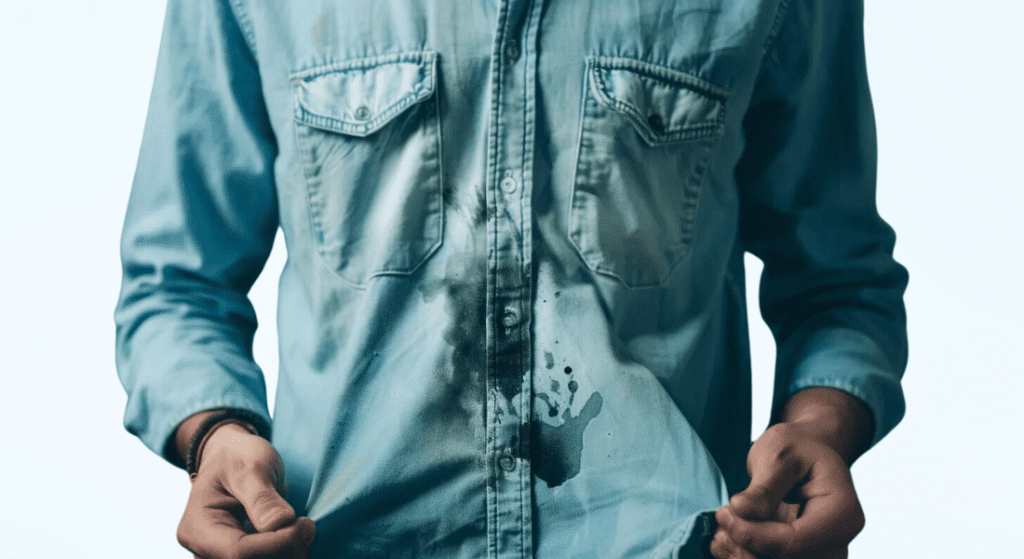
How to Remove Old or Set-In Oil Stains from Clothes
Old oil stains can often be removed, but they usually require more pretreatment than a fresh spill. A stain that has already been washed may also be easier to see once the garment is completely dry.
- Place a clean white towel or piece of cardboard behind the stained area.
- Apply liquid laundry detergent or a fabric-safe prewash stain remover to the dry stain.
- Gently work the treatment into the fibers with your fingers or a soft brush.
- Let it sit for the amount of time directed on the product label.
- Wash using the warmest water permitted by the care label.
- Air dry the garment and inspect the area.
- Repeat the treatment if the stain becomes lighter but remains visible.
Do not progressively add stronger chemicals or hotter water after every attempt. Repeating a fabric-safe pretreatment is generally less risky than ignoring the care label.
How to Remove an Oil Stain After Washing
If an oil stain remains after a normal wash, washing the garment repeatedly without pretreating it is unlikely to solve the problem. Concentrate the cleaning product on the stained fibers first.
- Allow the garment to dry enough that you can locate the entire stain.
- Apply liquid laundry detergent or prewash stain remover directly to it.
- Gently work the product into durable fabric.
- Let it remain for the label-approved pretreatment time.
- Wash again using the correct temperature and cycle.
- Inspect and air dry before deciding whether another treatment is needed.
For an olive-oil mark that appeared after laundering, use our more specific guide to removing olive oil stains after washing.
Can You Remove an Oil Stain After the Dryer?
It may still be possible. A dryer-treated oil stain is normally more difficult to remove, but one drying cycle does not automatically make it permanent.
Pretreat the dry stain with a fabric-safe prewash product or liquid laundry detergent, wash it according to the care label, and air dry it while evaluating the result. Several gentle treatment cycles may be required.
Avoid machine drying the garment again while a visible oily shadow remains.
How to Get an Oil Stain Out of a Shirt or Pants
The garment type matters less than the fabric and care instructions. The standard blot, absorb, pretreat, wash, and inspect method works for many machine-washable shirts, T-shirts, jeans, work pants, and cotton or polyester clothing.
| Fabric or garment | Recommended approach |
|---|---|
| Cotton shirts | Pretreat with laundry detergent or stain remover and wash using the warmest label-approved water. |
| Polyester clothing | Pretreat carefully because synthetic fibers can retain oily soil. Repeat before drying if necessary. |
| Jeans and denim | Use the standard washable-fabric method, but avoid aggressive brushing that could lighten the dyed surface. |
| Printed or dark garments | Test stain removers on an inside seam and avoid bleach unless the care label and product instructions allow it. |
| Wool or silk | Do not automatically apply the standard method. Follow the label or consult an appropriate professional cleaner. |
| Leather or suede | Do not machine wash unless the manufacturer specifically permits it. Use material-specific professional care. |
| Dry-clean-only garments | Blot excess oil, avoid home washing, and point out the stain when taking the garment to a qualified cleaner. |
What Should You Use on an Oil Stain?
Prewash Stain Remover
A fabric-compatible prewash stain remover is the first choice for many washable garments. Follow its application time, fabric restrictions, and washing instructions.
Liquid Laundry Detergent
Liquid laundry detergent can be applied directly to many washable oil stains. It contains surfactants that help suspend oily soil so it can be carried away in the wash.
Hand-Dishwashing Liquid
A small amount of diluted clear hand-dishwashing liquid can loosen oil on many durable washable fabrics. Patch test it first, rinse it thoroughly, and do not pour a large amount into the washing machine.
Never substitute automatic dishwasher detergent. Dishwasher products can contain stronger alkaline ingredients or bleaching agents that are unsuitable for clothing.
Baking Soda or Cornstarch
These powders can absorb surface oil from a fresh spill. They are an optional first step—not a complete substitute for pretreatment and washing.
Oil-Stain Treatments to Avoid
- Rubbing a fresh spill: This spreads oil and forces it farther into the fabric.
- Using the dryer too soon: Inspect the garment before applying dryer heat.
- Mixing cleaning chemicals: Do not combine bleach, ammonia, vinegar, peroxide, solvents, or other products.
- Applying undiluted products without checking directions: More product can cause discoloration, residue, or difficult rinsing.
- Using automatic dishwasher detergent: It is not formulated as a clothing pretreatment.
- Scrubbing delicate fabric: Aggressive brushing can damage fibers or remove dye.
- Ignoring the care label: A stain-removal method is not useful if it damages the garment.
Does Vinegar Remove Oil Stains?
Vinegar is not the best first treatment for oil because it does not loosen grease as effectively as the surfactants in laundry detergent, prewash stain remover, or hand-dishwashing liquid.
Adding vinegar to baking soda also causes the two ingredients to neutralize each other. For a straightforward oil stain, use a simpler and more targeted process: absorb excess oil, pretreat it with an appropriate cleaning product, wash it, and inspect it before drying.
Choose the Correct Guide for the Stain
This page is the main guide for fresh, old, and set-in everyday oil stains on washable clothing. Use these related guides for more specific situations:
- Cooking oil and general oily food: Continue using the method on this page.
- Grease stains: Read how to get grease stains out of clothes.
- Motor or engine oil: Follow our motor-oil and automotive-grease guide.
- Olive oil discovered after washing: Read how to remove washed olive-oil stains.
- Oil when the garment cannot be washed immediately: See how to manage an oil stain without washing right away.
When Should You Use Professional Cleaning?
Stop home treatment when the garment is labeled dry-clean-only, is made from delicate or specialty material, has unstable dye, or begins showing color loss or fiber damage.
Professional cleaning may be appropriate for wool, silk, leather, suede, tailored garments, expensive clothing, or stains involving unknown industrial substances. Tell the cleaner what caused the stain and which products have already been used. Removal is not guaranteed, especially after repeated drying or previous chemical treatment.
Need Help With Washable Laundry in Clarksville?
The Dutchman’s Laundry provides drop-off wash and fold service in Clarksville, TN for suitable washable clothing. Let our team know about stained garments when dropping them off so the item and its care requirements can be reviewed.
You can also pretreat your garments and use our self-service laundromat in Clarksville.
Specialty, hazardous, dry-clean-only, leather, or suede items may not be appropriate for standard laundry service. Confirm suitability with our team first.
🗺️ Get directions to The Dutchman’s Laundry
Oil-Stain Removal Checklist
- Read the garment’s care label.
- Remove solids and blot excess oil.
- Use an absorbent powder on a fresh spill if appropriate.
- Pretreat with a fabric-safe stain remover or liquid laundry detergent.
- Use diluted hand-dishwashing liquid only when appropriate.
- Wash using the warmest water allowed by the care label.
- Inspect the stain before using the dryer.
- Air dry while evaluating the result.
- Repeat a gentle treatment for old stains.
- Use the appropriate specialized guide for grease, motor oil, or olive oil.
Frequently Asked Questions About Oil Stains
How do you get oil stains out of clothes?
Blot the excess oil, optionally absorb a fresh spill with baking soda or cornstarch, pretreat the stain with liquid laundry detergent or a prewash stain remover, and wash using the warmest water permitted by the care label. Inspect the garment before drying.
How do you remove old oil stains from clothes?
Apply a fabric-safe prewash stain remover or liquid laundry detergent directly to the old stain. Allow the recommended pretreatment time, wash according to the care label, and air dry while checking the result. Repeat if the mark becomes lighter but remains visible.
Can an oil stain come out after washing?
Yes. Pretreat the exact area before washing it again. A normal wash without concentrated pretreatment may not remove oil embedded in the fibers.
Can you remove an oil stain after machine drying?
Sometimes. Dryer-treated stains are more difficult, but they may respond to repeated pretreatment, washing, and air drying. Avoid putting the garment through the dryer again until the mark is gone.
Does baking soda remove oil stains from clothes?
Baking soda can absorb some surface oil, particularly from a fresh stain. It normally works best when followed by a proper pretreatment and wash.
What is the best oil-stain remover for clothes?
There is no single best product for every garment. A fabric-compatible prewash stain remover or liquid laundry detergent is suitable for many washable clothes. Always follow both the product directions and garment care label.
Should you wash an oil stain in hot or cold water?
Use the warmest water permitted by the garment’s care label. Do not automatically use hot water on fabric that only allows a cold or warm wash.
Will dry cleaning remove an oil stain?
Professional dry cleaning can be appropriate for some oily stains and dry-clean-only garments, but removal is not guaranteed. Point out the stain and identify its source when delivering the garment.
Sources and Methodology
This guide was reviewed against current stain-treatment recommendations from the American Cleaning Institute’s Stain Removal Guide and the University of Georgia Extension textile-care guide. Product instructions and the garment’s permanent care label should take priority over general advice.
Written by
TDL Team
The laundry professionals behind The Dutchman’s Laundry in Clarksville, TN—family-owned since 2015. We share practical laundry guidance based on the stains, fabrics, and laundry problems our team handles every day.