

To get laundry detergent stains out of clothes, rinse the marked area, soak the garment in the warmest water allowed by its care label, gently work the fabric together, and rewash or run an extra rinse without adding more detergent. Air-dry the item and inspect it before using the dryer.
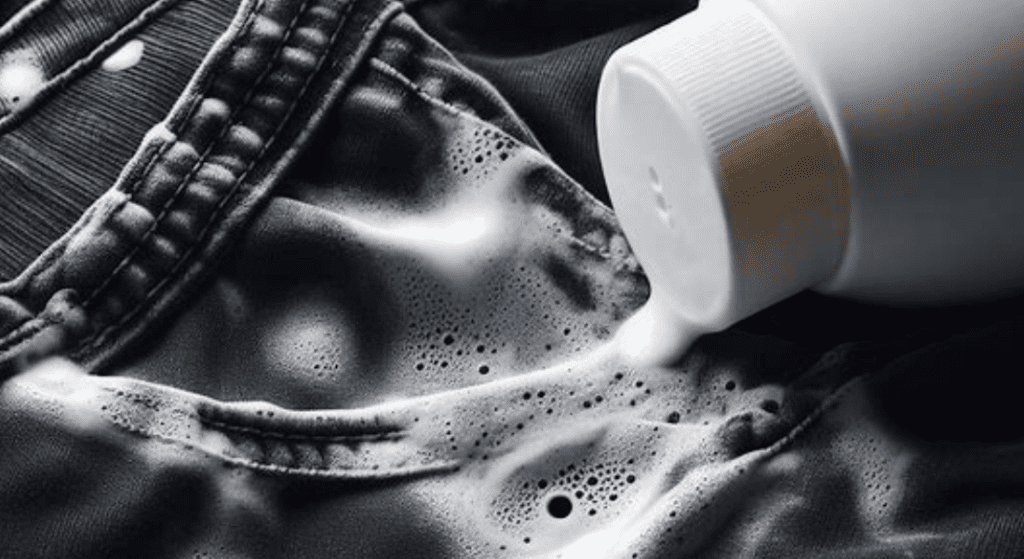
Laundry detergent “stains” are usually undissolved detergent, excess suds, pod film, or residue that did not rinse away completely. They may appear as white streaks, blue marks, powdery patches, stiffness, or a waxy-looking film after washing.
The correct treatment depends on whether the mark came from liquid detergent, powder, a laundry pod, fabric softener, hard water, or actual color loss. This guide will help you identify the problem and remove detergent residue safely—even if the clothes have already been through the dryer.
Detergent marks still showing after washing? Bring your washable clothes, towels, bedding, or family laundry to The Dutchman’s Laundry. Our drop-off laundry service in Clarksville can handle the washing, drying, and folding for you.
Quick Steps for Removing Detergent Stains
- Check the care label. Follow the garment’s permitted water temperature, washing, and drying instructions.
- Do not apply more concentrated detergent. First determine whether the mark is detergent residue or another type of stain.
- Rinse the affected area. Hold it under running water to loosen surface residue.
- Soak the garment. Use the warmest water permitted by the care label.
- Gently work the fabric. Rub the marked area against itself without aggressive scrubbing.
- Pretreat if necessary. Use an enzyme- or oxygen-based laundry pretreatment only when its label and the garment’s care label permit it.
- Rinse or rewash. If excess detergent caused the problem, use no additional detergent or only the correctly measured amount needed for the load.
- Air-dry and inspect. Do not use dryer heat until the mark is gone.
Multiple clear-water rinses may be necessary when clothing contains significant detergent buildup.
What Do Laundry Detergent Stains Look Like?
Detergent residue can look different depending on the product, fabric, water temperature, and washer conditions.
| What you see | Possible cause | Best first step |
|---|---|---|
| White streaks or powder | Undissolved powder, too much detergent, poor rinsing, or mineral residue | Rinse and soak in the warmest care-label-safe water |
| Blue or colored marks | Concentrated liquid detergent or pod contents | Soak, gently work the area, and use a compatible laundry pretreatment |
| Clear or waxy film | Partially dissolved laundry pod film | Resoak in warm care-label-safe water and rewash |
| Stiff or rough patches | Detergent buildup or inadequate rinsing | Run one or more clear-water rinses |
| Greasy-looking spots | Fabric softener or another oil-based product | Treat as an oily residue rather than a detergent stain |
| A lighter patch with no residue | Possible dye loss from bleach or another chemical | Stop treatment; lost color cannot be rinsed away |
Not every white mark after washing is detergent. Hard-water minerals, lint, deodorant, fabric softener, and dye loss can look similar. Use our guide to diagnosing white stains and marks on clothes if the cause is unclear.
Why Does Laundry Detergent Stain Clothes?
Detergent is designed to dissolve in wash water and rinse away. Visible marks usually occur when something prevents that process from working correctly.
Common causes include:
- Using more detergent than the product recommends
- Overloading the washing machine
- Using regular detergent in a high-efficiency washer
- Placing a laundry pod on top of clothing or in the dispenser
- Using powdered detergent that does not dissolve fully
- Selecting a short cycle that does not provide enough rinsing
- Using a water temperature unsuitable for the detergent
- Detergent buildup inside the dispenser or washer
- Hard or very soft water affecting the necessary detergent dose
Follow the instructions on both the detergent container and washing-machine manual. The correct amount may change according to load size, soil level, water hardness, and washer type.
How to Remove Fresh Detergent Stains From Clothes
A fresh detergent mark is generally easier to remove because it has not been exposed to dryer heat.
- Remove the garment from the load.
- Rinse the marked area under running water.
- Fill a basin with the warmest water permitted by the garment’s care label.
- Submerge the marked section or the entire washable garment.
- Gently rub the affected fabric against itself.
- Allow it to soak for approximately 30–60 minutes.
- Rinse thoroughly.
- Run a clear-water rinse or rewash according to the care label.
- Air-dry the garment and inspect it.
If a faint mark remains, repeat the treatment instead of increasing the water temperature or scrubbing more aggressively.
How to Get Liquid Detergent Stains Out of Clothes
Liquid laundry detergent may leave blue, green, or translucent marks when concentrated product touches clothing and does not disperse properly.
- Rinse away any visible or slippery residue.
- Soak the item in the warmest care-label-safe water.
- Apply an enzyme- or oxygen-based laundry pretreatment if its label allows use on the fabric and color.
- Let the product work for the time stated on its label.
- Rinse the treated area thoroughly.
- Rewash without overloading the machine.
- Air-dry and inspect before using the dryer.
Do not pour additional concentrated detergent onto a detergent mark unless the product’s instructions specifically recommend using it as a pretreatment.
How to Remove Powder Detergent Residue
Powdered detergent can leave white, chalky, or grainy residue when it does not dissolve completely. This is more likely with an overloaded washer, an excessive dose, unsuitable water temperature, or certain hard-water conditions.
- Brush away loose dry powder.
- Soak the garment in the warmest water its label permits.
- Gently rub the marked fabric against itself.
- Continue soaking for up to one hour.
- Rinse thoroughly and rewash.
Follow the detergent package when selecting water temperature. If powder residue repeatedly appears, consider a detergent formulated for your normal wash temperature and washer type.
How to Get Tide Pod Stains and Laundry Pod Residue Out of Clothes
A laundry pod can leave a colored mark, sticky patch, or clear film when it becomes trapped between clothes and does not receive enough water to dissolve.
Removing a Fresh Laundry Pod Mark
- Remove the affected garment from the washer.
- Rinse the area under warm care-label-safe water.
- Soak the garment until the film begins to soften.
- Gently work the material with your fingers.
- Apply a compatible oxygen- or enzyme-based pretreatment if colored residue remains.
- Rinse and rewash the garment.
- Air-dry and check the area.
Removing a Tide Pod Stain After Drying
Pod marks can sometimes be removed after drying, although the treatment may need to be repeated.
- Thoroughly dampen the garment with the warmest water allowed by its care label.
- Apply a compatible laundry pretreatment to the marked area.
- Allow it to work for the label-recommended time—often approximately 10 minutes.
- Rinse and inspect the area.
- Repeat if necessary, then rewash.
- Air-dry instead of using dryer heat.
To prevent future pod residue, place the pod at the bottom of the empty washer drum before adding clothes. Do not put pods in the detergent dispenser, place them on top of a full load, cut them open, or use them for handwashing or pretreating. Always follow the pod manufacturer’s directions and keep laundry products secured away from children.
How to Remove Detergent Stains After Drying
Detergent stains are not automatically permanent after a dryer cycle. However, heat may make the remaining residue harder to loosen.
- Check that the mark is residue rather than permanent dye loss.
- Resaturate the affected area with the warmest care-label-safe water.
- Soak it for 30–60 minutes.
- Gently work the fabric together.
- Use a compatible oxygen- or enzyme-based pretreatment if water alone is insufficient.
- Rinse and rewash.
- Air-dry and repeat if necessary.
Avoid applying high heat between attempts. Repeated gentle treatment is safer than strong chemicals or aggressive scrubbing.
How to Remove Detergent Stains Without Vinegar
You do not need vinegar to remove most detergent stains. Water, adequate soaking, gentle agitation, a compatible laundry pretreatment, and thorough rinsing are the primary treatment methods.
- Rinse the mark under running water.
- Soak in the warmest water allowed by the care label.
- Use an oxygen- or enzyme-based pretreatment when compatible.
- Run an extra rinse or clear-water wash.
- Repeat before drying if residue remains.
These steps also avoid uncertainty about whether vinegar is suitable for a particular fabric or washing machine.
Does Vinegar Remove Detergent Residue?
Diluted white vinegar may help with certain mineral or alkaline deposits, but it is not required for ordinary detergent residue. Some washer and garment manufacturers place restrictions on laundry additives, so check both manuals before using it.
Never mix vinegar with chlorine bleach. Do not combine household cleaning products unless their labels explicitly state that it is safe.
How to Get Detergent Stains Out of Black and Dark Clothes
White residue is especially visible on black shirts, pants, leggings, and other dark garments.
- Turn the garment inside out.
- Rinse the marked area with cool or lukewarm water, according to its label.
- Soak and gently work the fabric.
- Rewash dark colors separately with a properly measured detergent dose.
- Use an extra rinse if the machine provides one.
- Air-dry and inspect the garment.
Avoid aggressive brushing, which may create a faded-looking area on dark fabric. For complete color-care instructions, read our guide to washing black and dark clothes without fading.
How to Remove Detergent Stains From White Clothes
Rinse and soak white clothing using the same basic method. If colored liquid detergent or pod contents leave a blue mark, use an oxygen-based laundry pretreatment only when its label and the garment’s care label permit it.
Do not automatically use chlorine bleach. Bleach may be prohibited for the garment and will not correct every type of detergent residue. It can also damage fibers, colored stitching, printed designs, and stretch materials.
Removing Detergent Residue From Delicate Fabrics
Silk, wool, rayon, knits, and embellished clothing require gentler treatment.
- Follow the care label exactly.
- Use cool water when required.
- Do not aggressively rub, twist, or brush the fabric.
- Avoid long soaking unless permitted.
- Do not apply oxygen bleach, enzymes, vinegar, or other additives unless they are approved for that fabric.
- Dry the garment using the method stated on its label.
Stop home treatment if the fabric changes color, texture, shape, or finish.
Worried about damaging an important garment? Our Clarksville drop-off laundry team can check the care label and determine whether the washable item can be safely processed.
What if Detergent Residue Is on the Entire Load?
If several garments feel stiff, slippery, or coated, too much detergent may have been used.
- Return the garments to the washer without overloading it.
- Run a complete rinse or wash cycle without adding detergent.
- Select an extra rinse when available.
- Check for remaining suds or stiffness.
- Repeat a clear-water rinse if necessary.
For heavily accumulated buildup, more than one rinse may be needed. Once the load rinses without excess suds, return to the detergent dose recommended for your washer, water conditions, and load.
What if the Washing Machine Keeps Leaving Detergent Marks?
Recurring marks across different loads may point to the washer, loading method, or detergent dispenser rather than a single garment.
- Clean the detergent dispenser according to the washer manual.
- Inspect the drum and door seal for visible buildup.
- Use the manufacturer’s cleaning or maintenance cycle.
- Confirm that the machine receives adequate water.
- Use HE detergent in an HE washer.
- Reduce the load size so clothing can move freely.
- Measure detergent instead of filling to the dispenser’s maximum line.
The dispenser’s “max” line indicates capacity, not necessarily the correct detergent dose for every load.
How to Prevent Detergent Stains on Clothes
Measure the Detergent
Follow the product instructions for the washer type, water hardness, load size, and soil level. More detergent does not automatically produce cleaner clothing.
Do Not Overload the Washer
Water and detergent need room to circulate. If the drum is tightly packed, detergent may become trapped in folds and fail to rinse away.
Split large loads or use a larger machine. Our self-service laundromat in Clarksville has multiple washer sizes for everyday and larger loads.
Use HE Detergent in HE Washers
Regular detergent may create excessive suds in a high-efficiency washer. Look for the HE symbol and follow the washer manufacturer’s instructions.
Place Laundry Pods in the Drum First
Place the pod in the empty drum before adding clothes. Do not place it in the dispenser unless the appliance and pod instructions specifically direct otherwise.
Use the Correct Dispenser
Place liquid detergent, powder, bleach, and fabric softener only in their designated compartments, following the appliance manual.
Select an Appropriate Cycle
A very short cycle may not provide enough time or water for some loads. Choose a cycle suited to the fabric, load size, and soil level.
Clean the Washer Regularly
Follow the manufacturer’s maintenance schedule for the drum, dispenser, seal, and accessible filters. Existing buildup can transfer back onto clothes.
Detergent Residue on Towels, Bedding, and Large Loads
Towels, blankets, sheets, and comforters can trap detergent when they are packed into a machine without enough room to circulate.
- Wash bulky items separately.
- Use a washer large enough for the item to move freely.
- Measure detergent carefully.
- Select the appropriate bedding or bulky cycle when available.
- Use an extra rinse if permitted.
- Dry the item completely according to its care label.
For oversized washable bedding, explore our comforter and bulky-item laundry service.
Frequently Asked Questions
Do laundry detergent stains come out of clothes?
Most detergent marks can be removed because they are residue rather than permanent discoloration. Rinse, soak, gently work the fabric, and rewash before using dryer heat.
Are detergent stains permanent?
Usually not. A lighter patch caused by bleach or dye loss may be permanent, but white residue, blue liquid marks, powder, and pod film can often be removed with repeated gentle treatment.
Can laundry detergent stain clothes?
Concentrated detergent can leave visible marks when it does not dissolve, disperse, or rinse properly. Excessive dosing and overloading are common contributing factors.
What causes white detergent stains on clothes?
Common causes include undissolved powder, too much detergent, poor rinsing, an overloaded washer, and mineral deposits from water.
How do I remove blue detergent stains?
Soak the garment in the warmest water permitted by its care label, gently work the marked area, and use a compatible oxygen- or enzyme-based laundry pretreatment if necessary. Rinse and rewash before drying.
How do I remove dried laundry detergent?
Resaturate the dried area, soak it, gently loosen the residue, and rewash. Use a compatible laundry pretreatment if water alone does not remove the mark.
Should I rewash clothes with detergent stains?
Yes. If the garment is otherwise clean and contains excess detergent, use a rinse or wash cycle without adding more detergent. Use an extra rinse when available.
Can baking soda remove detergent stains?
Baking soda is not necessary for most detergent marks. Start with water, soaking, gentle agitation, and thorough rinsing. Check the washer manual and care label before adding any household product.
Does vinegar remove laundry detergent stains?
Vinegar may affect certain residues, but it is not required for ordinary detergent marks and may not be suitable for every washer or fabric. Never combine vinegar with chlorine bleach.
Why do Tide Pods leave stains on clothes?
Pod film or concentrated contents may remain when the pod is trapped in an overloaded washer or does not receive enough water to dissolve. Place the pod in the empty drum before adding clothing.
Can I remove a Tide Pod stain after drying?
It may still come out. Dampen and soak the garment, apply a compatible laundry pretreatment, rinse, and rewash. Repeat the treatment and air-dry until the mark is gone.
Why is detergent residue appearing on every load?
Check for excessive dosing, overloading, the wrong detergent type, a dirty dispenser, washer buildup, or a cycle that does not provide adequate rinsing. Follow the appliance’s troubleshooting and cleaning instructions.
Related Laundry Guides
- White stains and marks on clothes after washing
- How to choose laundry detergent
- How to wash dark and black clothes without fading
- How to do laundry without damaging your clothes
- How to use bleach on colored clothes safely
- More laundry and stain-removal guides
Key Takeaways
- Most detergent stains are removable residue rather than permanent stains.
- Rinse and soak the garment in the warmest water permitted by its care label.
- Gently work the fabric instead of scrubbing aggressively.
- Use an appropriate oxygen- or enzyme-based pretreatment when necessary.
- Place laundry pods in the empty washer drum before adding clothes.
- Do not add more detergent when the load already contains excessive residue.
- Air-dry and inspect the garment before using dryer heat.
- Prevent future marks by measuring detergent, avoiding overloads, and maintaining the washer.
Written by
TDL Team
The laundry professionals behind The Dutchman’s Laundry in Clarksville, TN—family-owned since 2015. We share tips based on what we see and solve every day in our laundromat.