Updated September 12, 2026
Blood stains can be difficult to remove because the proteins in blood bind to fabric fibers, especially after the stain dries or is exposed to heat. Start with cold water rather than hot water, then pretreat the stain before washing. This guide explains how to remove fresh, dried and already-washed blood stains from clothes while protecting the fabric.
Quick answer: How do you remove blood stains from clothes?
- Blot fresh blood instead of rubbing it into the fabric.
- Rinse or soak the stain with cold water.
- Pretreat with liquid laundry detergent or a fabric-safe stain remover.
- Wash according to the garment care label.
- Check the stain before drying and avoid heat until it is gone.
Why Are Blood Stains So Hard to Remove?
Blood contains proteins that can cling to fabric fibers. Once the stain dries—or is exposed to heat—it can become more difficult to remove. That is why cold water and early treatment are usually the safest starting point for washable clothing.
Before treating any garment, check its care label. Delicate fabrics, dry-clean-only garments and items with unstable dyes may require professional care.
How to Remove Fresh Blood Stains
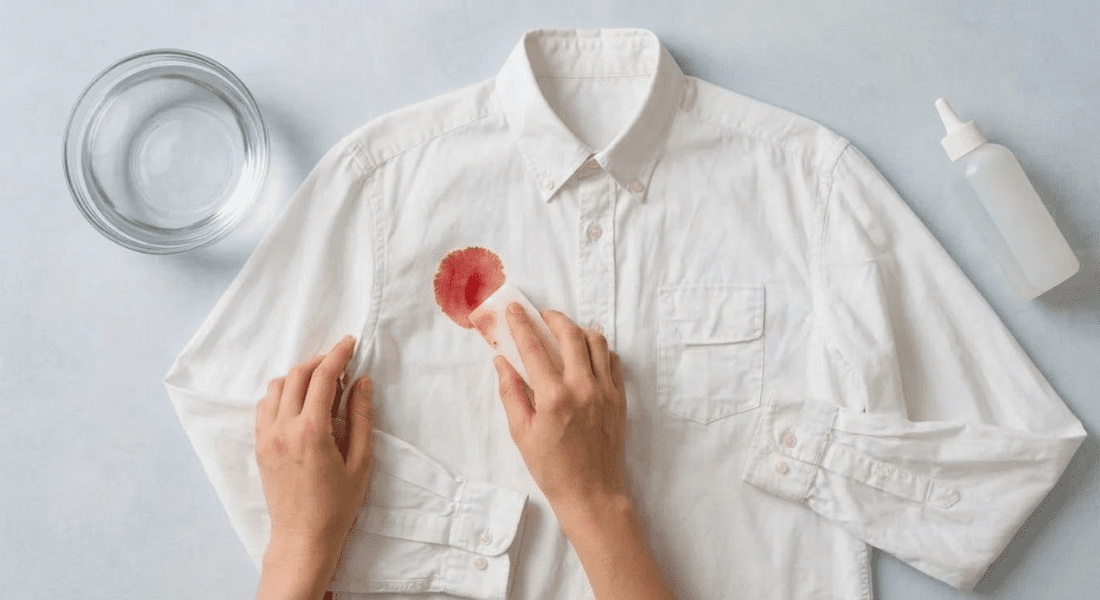
Fresh blood is generally easier to remove than a stain that has already dried. Act as soon as possible and avoid hot water.
- Blot the stain: Gently blot excess blood with a clean white cloth or paper towel. Avoid rubbing because this can spread the stain deeper into the fibers.
- Rinse with cold water: If possible, rinse the back of the stained area under cold running water to help push the blood out of the fabric.
- Soak if needed: For a larger stain, soak the garment in cold water for 15–30 minutes.
- Apply liquid laundry detergent: Work a small amount of liquid laundry detergent into the stain. Let it sit according to the product directions, then rinse thoroughly with cold water.
- Wash according to the care label: Use the recommended cycle and detergent for the garment.
- Check before drying: Inspect the stained area before putting the garment in the dryer. Dryer heat can make remaining discoloration harder to remove.
If you are unsure whether to use hot or cold water for other types of stains, see our hot or cold water for stains guide.
How to Remove Dried Blood Stains From Clothes
Dried blood usually needs more pretreatment than a fresh stain, but repeated gentle treatment is better than immediately using heat or harsh chemicals.
- Dampen the stain: Wet the stained area thoroughly with cold water.
- Soak the garment: Let the affected area soak in cold water for 30 minutes or longer if the care label allows it.
- Pretreat the stain: Apply a fabric-safe stain remover or liquid laundry detergent and allow it to work according to the product label.
- Use hydrogen peroxide only when appropriate: On suitable light-colored washable fabrics, 3% hydrogen peroxide may help break down remaining blood. Test it first in a hidden area because peroxide can lighten some dyes.
- Rinse and repeat if needed: Rinse with cold water and inspect the fabric. Repeat the pretreatment if discoloration remains.
- Wash and air-dry first: Wash according to the care label, then avoid dryer heat until you are confident the stain is gone.
How to Remove Blood Stains That Have Already Been Washed
A blood stain that has already gone through the washing machine may still be removable. If the garment was also dried with heat, the stain may require several rounds of treatment.
- Re-wet the stained area with cold water.
- Apply liquid laundry detergent or a fabric-safe stain remover.
- Allow the treatment to sit according to the product directions.
- Gently work the treatment into durable fabrics without aggressive scrubbing.
- Rinse with cold water and inspect the area.
- Repeat if needed before washing again.
- Air-dry the garment until the stain is fully removed.
For especially stubborn stains, repeated pretreatment is usually safer than increasing the water temperature.
Blood Stains on White Clothes
White washable fabrics may tolerate treatments that would risk fading colored clothing, but always check the care label first.
Start with cold water and liquid detergent. For suitable white or light-colored washable fabrics, a small amount of 3% hydrogen peroxide may help lift remaining discoloration. Let it fizz briefly, then rinse thoroughly with cold water.
Do not assume that every white fabric is bleach-safe. Some whites contain fibers, finishes or decorative materials that can be damaged by chlorine bleach or other strong treatments.
Blood Stains on Sheets and Bedding
Blood stains on sheets and bedding may require different treatment depending on the fabric, stain age and item size. Start with cold water and avoid dryer heat while any discoloration remains.
For detailed instructions, see our complete guide to removing blood stains from sheets and bedding.
Blood Stains on Polyester and Nylon
Synthetic fabrics such as polyester and nylon generally benefit from gentler treatment.
- Check the care label before applying any stain treatment.
- Rinse or soak the stained area with cold water.
- Use a mild liquid detergent or fabric-safe stain remover.
- Avoid aggressive scrubbing that may damage the fabric surface.
- Wash using the cycle and temperature recommended on the care label.
- Keep the garment out of the dryer until the stain is gone.
Pretreating Blood Stains
Apply liquid laundry detergent or a fabric-safe stain remover directly to the stain. Allow it to work according to the product directions, gently work it into durable fabrics, then rinse before washing.
For older or set-in stains, you may need to repeat the pretreatment more than once.
Using Hydrogen Peroxide on Blood Stains
Hydrogen peroxide may help lift blood stains from some washable, light-colored fabrics. Apply a small amount of 3% hydrogen peroxide, allow it to fizz briefly, then rinse thoroughly with cold water.
Always spot-test hydrogen peroxide in a hidden area first because it may lighten fabric dyes. Do not use it simply because a fabric appears white or colorfast.
For more information about when it is appropriate to use peroxide, see our guide to hydrogen peroxide in laundry.
Other Home Treatments for Blood Stains
If you do not have a dedicated stain remover available, mild household treatments may sometimes help, but the garment care label should always come first.
- Liquid Laundry Detergent: Often the best first option for washable clothing because it is designed for use on fabric.
- Baking Soda Paste: A paste made with baking soda and cold water can be applied gently to some washable fabrics. Rinse thoroughly afterward.
- Diluted White Vinegar: Diluted white vinegar may help loosen some washable stains, but always spot-test first. Never mix vinegar with chlorine bleach.
What Not to Do With a Blood Stain
- Do not start with hot water. Heat can make protein-based stains more difficult to remove.
- Do not put the garment in the dryer while the stain is still visible.
- Do not aggressively rub fresh blood. Blot instead.
- Do not mix cleaning chemicals. Follow product labels and use one treatment at a time.
- Do not use chlorine bleach unless the garment label and product instructions confirm it is appropriate.
Pro Laundry Services in Clarksville
Need help with a larger laundry load? The Dutchman’s Laundry offers drop-off wash and fold in Clarksville, TN and self-service laundry.
Visit us at 551 Dover Rd, Clarksville, TN. We’re open daily from 5 AM to midnight. You can also contact us to learn more about our laundry services.
The Dutchman’s Laundry, Clarksville, TN Services
- Drop-Off Laundry Service
- Coin Laundry
- Self-Service Laundromat
- TA-50 Army Gear Cleaning
- Bulky Items Laundry
Key Tips for Removing Blood Stains
- Use cold water first: Avoid heat while the blood stain remains.
- Act quickly: Fresh stains are generally easier to treat.
- Blot instead of rubbing: Rubbing can spread the stain.
- Pretreat before washing: Use detergent or a fabric-safe stain remover.
- Check before drying: Keep the garment out of the dryer until the stain is gone.
- Spot-test peroxide: Hydrogen peroxide can lighten some colored fabrics.
- Follow the care label: Delicate and dry-clean-only fabrics may need professional treatment.
FAQs
Can hydrogen peroxide remove blood stains?
Hydrogen peroxide may help remove blood stains from some washable, light-colored fabrics. Use 3% hydrogen peroxide, test it first in a hidden area, rinse thoroughly afterward and avoid using it on fabrics that may fade.
Does bleach remove blood stains?
Chlorine bleach may be suitable for some white, bleach-safe fabrics, but it can damage colors and certain fibers. Always check the garment care label and bleach product instructions before use.
Does OxiClean remove blood stains?
An oxygen-based stain remover may help with blood stains on compatible washable fabrics. Follow the product directions for pretreatment or soaking and check the garment care label first.
How do you remove blood stains from a couch?
Upholstery should be treated according to its cleaning code and manufacturer instructions. Blot fresh blood rather than rubbing it, use as little moisture as possible and consider a professional upholstery cleaner for delicate or difficult fabrics.
Can baking soda remove blood stains?
A baking soda and cold-water paste may help loosen some stains on washable fabrics. Apply gently, rinse thoroughly and follow with normal pretreatment and washing if the care label allows it.
Does dry cleaning remove blood stains?
A professional cleaner may be able to treat blood stains on garments that are not suitable for normal washing. Tell the cleaner what caused the stain and whether you have already used any treatments on it.
Written by
TDL Team
The laundry professionals behind The Dutchman’s Laundry in Clarksville, TN – Family-owned since 2015. We share practical laundry tips based on the stains, fabrics and laundry questions we regularly encounter.