Updated August 15, 2026
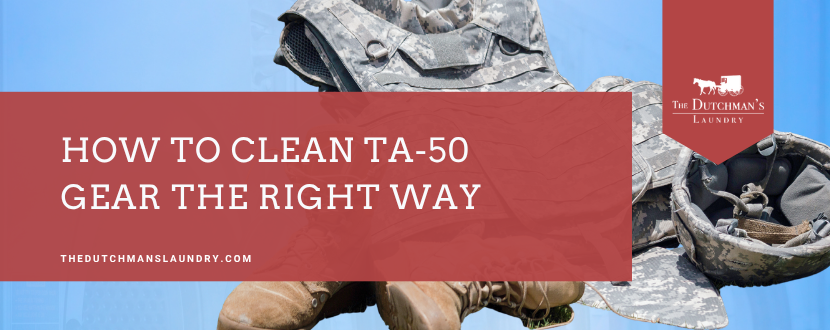
TA-50 and Organizational Clothing and Individual Equipment (OCIE) cannot all be cleaned the same way. Some fabric items may be machine washable, while ballistic components, protective inserts, frames, electronics, coated materials, and certain load-bearing equipment require hand cleaning or surface cleaning only.
The safest way to clean TA-50 gear is to inventory every item, empty all pockets, remove non-washable components, read each care label, brush away loose soil, and clean every piece according to its specific instructions. When the label is missing or unclear, use the gentlest method and confirm the requirements with your unit or Central Issue Facility (CIF).
Important: This is general cleaning guidance, not an official Fort Campbell CIF acceptance policy. Item labels, technical manuals, unit instructions, and current CIF guidance always take priority.
Table of Contents
ToggleTA-50 Cleaning: Quick Answers
| Question | Short Answer |
|---|---|
| Can all TA-50 gear be machine washed? | No. Only machine-wash an item when its label or official instructions permit it. |
| Can an IOTV or plate carrier go in a washer? | Official Army guidance commonly directs soldiers to remove armor and hand-wash approved outer shells and component carriers. |
| Can ballistic inserts be washed? | No. Soft inserts and plates require their own surface-cleaning instructions and must never enter a washer or dryer. |
| What detergent should you use? | Use a small amount of mild detergent or soap unless the item instructions specify something different. |
| Can you use chlorine bleach? | Generally no. Army cleaning instructions for many OCIE items prohibit chlorine bleach, caustic cleaners, solvents and cleaning fluids. |
| Can TA-50 go in a dryer? | Only when the care label permits it. Many OCIE items should be air dried indoors or in the shade. |
| Will clean gear automatically pass CIF? | No. CIF personnel make all final decisions regarding cleanliness, completeness, condition and acceptance. |
Before Cleaning: Inventory and Inspect Every Item
Do not start by putting an entire TA-50 issue into a washer. Cleaning should begin with an inventory and inspection.
- Compare the equipment with your clothing record. Confirm what is present and identify missing components before cleaning.
- Empty every pocket and compartment. Check small pouches, hydration carriers, admin pockets, zippered sections and hidden sleeves.
- Separate items by care method. Create groups for machine-washable fabric items, hand-wash-only equipment, surface-clean-only components and items requiring official or specialist guidance.
- Read every care label. Similar-looking equipment may use different materials, coatings or cleaning instructions.
- Inspect for damage. Look for torn webbing, broken buckles, damaged closures, separated seams, cracked plates and compromised protective materials.
- Document questionable equipment. Do not attempt an aggressive repair or cleaning method that could make issued gear unserviceable.
For a complete inventory and turn-in preparation process, use our TA-50 gear list and CIF cleaning checklist.
What Must Be Removed Before Washing TA-50 Gear?
Remove anything that should not enter water or laundry equipment. Depending on the item, this may include:
- Hard armor plates
- Soft ballistic inserts
- Electronics, lights, batteries and cables
- Weapons and weapons-related accessories
- Ammunition, brass and chem lights
- Hydration reservoirs, filters and drinking tubes
- Documents, identification cards and personal belongings
- Removable rucksack frames, stays and supports
- Loose metal components that could damage a washer
- Helmet pads and chin straps when directed by CIF guidance
- Detachable pouches when separate cleaning is required
Do not assume that attaching buckles, covering hardware or placing the gear in a laundry bag makes a prohibited item machine washable.
How to Clean TA-50 Gear Step by Step
1. Brush Away Dry Mud and Loose Debris
Allow wet mud to dry when appropriate, then remove loose dirt with a cloth or soft-bristled brush. Pay attention to seams, webbing, hook-and-loop closures, pocket corners and areas behind removable pouches.
Avoid wire brushes, stiff tools and sharp scrapers. They can abrade fabric, cut coatings, damage stitching and weaken webbing.
2. Identify the Correct Cleaning Method
Use the item label and official instructions to determine whether it should be:
- Surface cleaned only
- Hand washed
- Machine washed on an approved cycle
- Cleaned using a model-specific procedure
- Referred to the unit, CIF or another authorized resource
If instructions are missing, hand cleaning with minimal moisture is generally less risky than automatically using a commercial washer.
3. Pretreat Approved Fabric Areas
For washable fabric with ground-in dirt, apply a small amount of mild detergent to the affected area. Test an inconspicuous section first and gently work the detergent with a cloth or soft brush.
Do not combine multiple stain removers. Avoid chlorine bleach, caustic products, cleaning solvents, gasoline, strong degreasers and unknown household mixtures unless the item’s official instructions specifically authorize a product.
4. Wash According to the Label
Hand-wash-only equipment should be cleaned in cool or warm water with mild detergent, using gentle agitation. Machine-washable items should be washed only on the cycle, temperature and settings approved by their labels.
Do not overload the washer. Bulky gear needs enough space for water and detergent to move through straps, folds, padding and fabric layers.
5. Rinse Thoroughly
Detergent left in webbing, padding and seams can attract dirt, hold odor or affect certain performance characteristics. Rinse repeatedly until the water runs clear and no suds remain.
6. Air Dry When Required
Remove excess water without twisting or wringing the gear. Open pockets, loosen straps and position the item so air can reach interior layers.
Unless the label specifically permits machine drying, air dry indoors or in the shade, away from heaters, open flames and direct sunlight. Do not store or present gear for turn-in until it is completely dry.
Can You Wash TA-50 Gear in a Washing Machine?
Some TA-50 items may be machine washable, but many are not. The care label or official instructions—not the item’s appearance—determine whether it belongs in a washer.
Before machine washing an approved item:
- Empty all pockets and compartments.
- Remove plates, inserts, frames, stays, electronics and other prohibited components.
- Fasten or secure loose straps according to the care instructions.
- Inspect buckles and hardware that could strike or damage the machine.
- Use mild detergent.
- Follow the approved water temperature and cycle.
- Allow enough room for effective washing and rinsing.
- Use an additional rinse when appropriate.
- Follow the label’s drying instructions.
Never machine-wash an item simply because another soldier washed similar-looking gear successfully. Differences in model, construction, age and protective materials can change the correct cleaning procedure.
How to Clean an IOTV or Plate-Carrier Outer Shell
Army OCIE guidance for many IOTV and plate-carrier systems instructs soldiers to remove armor components and hand-wash the approved outer shell and component carriers.
- Remove hard armor plates and all soft ballistic inserts.
- Remove loose dirt with a cloth or soft-bristled brush.
- Check the item’s specific use-and-care instructions.
- Hand wash the approved outer shell and fabric carriers in cool or warm water with mild detergent or soap.
- Do not use chlorine bleach, caustic cleaners, solvents or cleaning fluids.
- Rinse thoroughly until no detergent remains.
- Air dry indoors or in the shade, away from direct sunlight and heat.
- Confirm that every component is completely dry before reassembly.
Do not machine wash or machine dry a vest when its instructions prohibit it. Do not pressure wash ballistic gear.
How to Clean Soft Ballistic Inserts
Soft ballistic inserts generally require surface cleaning only. Remove loose soil with a cloth or soft-bristled brush and follow the insert’s official instructions.
Do not:
- Machine wash or machine dry inserts
- Submerge them unless explicitly instructed
- Use chlorine bleach or solvents
- Dry clean them
- Expose them to direct heat or strong sunlight
If an insert is saturated with fuel, bleach, lubricant or another chemical—or shows bunching, tears or other damage—stop cleaning and report the condition through the appropriate unit or CIF process.
How to Clean Hard Armor Plates
Hard plates must never enter a washing machine or dryer. Follow the plate’s use-and-care instructions. A typical official method involves removing loose dirt with a soft cloth or brush, using mild soap and warm—not hot—water on soiled surfaces, rinsing away all suds and allowing the plate to air dry away from heat or flame.
Do not continue using or attempting to clean a plate that is cracked, delaminated, punctured or exposing internal material. Report questionable armor through the proper channel.
How to Clean Rucksacks, Assault Packs and Pouches
Rucksacks and load-carrying equipment can hold dirt in seams, webbing, frames, pockets and padded areas. Some official rucksack instructions require hand washing and prohibit machine washing, machine drying and dry cleaning.
- Empty every pocket and compartment.
- Remove detachable pouches and accessories.
- Remove frames, stays or supports when the model’s instructions require it.
- Brush off dried mud and loose debris.
- Check the care label for the correct washing method.
- Hand wash with mild detergent when directed.
- Use a soft brush on heavily soiled fabric and webbing.
- Rinse repeatedly to remove all detergent.
- Open every compartment and air dry indoors or in the shade.
- Reassemble the gear only after all components are completely dry.
Do not force a framed, hardware-heavy or prohibited pack into a home or commercial washer. Bring uncertain items to the counter for review rather than loading them directly into a machine.
How to Clean Duffel Bags and Other Fabric TA-50
Many fabric duffel bags, pouches, webbing components and approved covers can be cleaned with mild detergent after all non-washable contents and components are removed. However, the item label remains the controlling instruction.
For approved fabric items:
- Brush off surface soil.
- Pretreat dirty seams and webbing with diluted mild detergent.
- Wash by hand or machine only as authorized.
- Rinse until no detergent remains.
- Open all pockets and air dry thoroughly.
Do not paint, dye, write on or attempt to conceal discoloration unless current official guidance specifically authorizes a marking method for that item.
How to Clean Sleeping Bags and Sleep-System Components
Sleep-system components can differ in insulation, coatings and care requirements. Check the label on every component rather than washing the entire system together.
- Remove the compression sack and separate all components.
- Empty debris from the foot box, seams and closures.
- Follow the approved water temperature and detergent instructions.
- Use a washer large enough for any component explicitly labeled machine washable.
- Do not use fabric softener, bleach or high heat unless the label permits it.
- Dry every layer completely before recompressing or storing the system.
If a component remains damp inside, it can develop odor or mildew during storage.
How to Clean ACU and OCP Uniforms
Army uniforms have different care considerations from load-bearing equipment and ballistic gear. Empty the pockets, close fasteners as directed, follow the uniform label and avoid experimenting with stain-removal chemicals that may affect fabric treatments.
Use our separate guide on how to wash and care for Army ACU and OCP uniforms for uniform-specific instructions.
How to Handle Difficult TA-50 Stains
Mud and Clay
Allow heavy mud to dry when appropriate, brush away the loose material and then use the item’s approved washing method. Repeated gentle cleaning is safer than aggressive scraping.
Oil, Fuel and Chemical Contamination
Do not use gasoline, flammable liquids or strong household solvents to clean issued gear. Some petroleum and chemical contamination can affect protective materials or make an item unserviceable.
When gear is saturated with fuel, bleach, lubricant or an unknown chemical, stop and obtain guidance from the unit, equipment manual or CIF.
Blood and Other Biological Contamination
Wear appropriate protective equipment and follow unit or installation procedures. Keep contaminated items separate from ordinary household laundry. Do not promise that an item is safe or serviceable based only on visible stain removal.
Tape Residue and Permanent Markings
Do not scrape issued equipment with a knife or another sharp tool. Follow current CIF guidance for adhesive residue and markings because approved methods can vary by item and installation.
Should You Use a Pressure Washer on TA-50 Gear?
A pressure washer should not be the default cleaning method for TA-50. High-pressure water can force moisture into padding, damage coatings, weaken seams, lift labels and harm ballistic or protective components.
Never pressure wash:
- Hard or soft armor
- IOTV or plate-carrier systems
- Electronics or battery components
- Coated or laminated equipment
- Foam or padded protective items
- Any item whose instructions prohibit high-pressure cleaning
Use a cloth, soft-bristled brush, mild detergent and the officially approved cleaning method instead.
How to Dry TA-50 Gear Safely
Clean gear can still be rejected or damaged when it is stored or presented while wet. Plan enough drying time before your CIF appointment.
- Do not twist or wring padded gear.
- Open pockets and compartments.
- Separate removable components.
- Hang or lay items according to their instructions.
- Use room-temperature airflow to improve drying.
- Keep gear away from heaters, dryers, flames and direct sunlight unless expressly permitted.
- Turn and reposition thick items so hidden areas can dry.
- Check padding, seams and webbing—not only the exterior.
- Do not reassemble or store the equipment until completely dry.
Common TA-50 Cleaning Mistakes
- Washing an entire issue with one method
- Ignoring item labels and official instructions
- Leaving plates or ballistic inserts inside a carrier
- Forgetting items in pockets
- Machine washing hand-wash-only gear
- Using chlorine bleach, solvents or caustic cleaners
- Using too much detergent
- Overloading a residential washer
- Using a pressure washer on protective equipment
- Machine drying items that require air drying
- Storing equipment before it is completely dry
- Attempting to dye or conceal damaged areas
- Assuming professional cleaning guarantees CIF acceptance
- Waiting until the day before the turn-in appointment
Preparing Clean Gear for CIF Turn-In
Cleaning is only one part of CIF preparation. Before your appointment:
- Confirm the current requirements with your unit and Fort Campbell CIF.
- Reconcile your OCIE record.</li current>
- Confirm that each item is complete.
- Remove unauthorized personal items and markings.
- Make sure all cleaned equipment is completely dry.
- Inspect buckles, straps, closures, frames and issued components.
- Keep documentation for missing or damaged equipment when required.
- Allow time to correct issues identified during your own inspection.
For the full preparation sequence, see our CIF cleaning and TA-50 turn-in checklist.
Fort Campbell soldiers can also confirm current hours, contact details and local procedures on the official Fort Campbell Central Issue Facility page.
DIY vs. Drop-Off TA-50 Cleaning
| Option | Best When |
|---|---|
| DIY hand cleaning | The gear requires controlled, item-specific hand washing and you have enough time for cleaning and drying. |
| Self-service laundry | The items are explicitly machine washable and you want to use suitable large-capacity equipment yourself. |
| Drop-off TA-50 cleaning | You have eligible machine-washable fabric gear and want the laundromat team to review and handle approved items. |
| Unit, CIF or specialist guidance | The item is ballistic, damaged, chemically contaminated, unusually valuable or lacks clear care instructions. |
For a detailed comparison of time and expense, read our TA-50 cleaning cost and budget guide.
TA-50 Cleaning Near Fort Campbell
The Dutchman’s Laundry provides drop-off cleaning for many eligible, machine-washable, fabric-based TA-50 and OCIE items at 551 Dover Road in Clarksville.
Items are reviewed before cleaning. We do not knowingly machine wash equipment when its label or official instructions prohibit it.
- Standard turnaround: Approximately 24–48 hours
- Typical order range: Approximately $20–$60, depending on quantity, size, condition and care requirements
- Drop-off hours: Daily from 8 AM–6 PM
- Appointment: No appointment required
- Location: 551 Dover Rd, Clarksville, TN 37042
Rush service may be available depending on the current workload. Ask the attendant when dropping off your gear.
Review eligible items, required preparation and service details on our TA-50 Army gear cleaning near Fort Campbell page.
CIF acceptance cannot be guaranteed. The final decision belongs to the inspector, and soldiers remain responsible for verifying that every required item and component is present.
TA-50 Cleaning FAQs
Can all TA-50 gear be machine washed?
No. Machine-wash only items whose labels or official instructions permit it. Ballistic inserts, armor plates and many load-bearing systems must not enter a washing machine.
Can an IOTV be washed in a washing machine?
Official Army guidance for many IOTV systems prohibits machine washing. Remove the plates and soft inserts, then hand-wash only the approved outer shell and carriers according to their instructions.
What detergent should be used on TA-50 gear?
Use a small amount of mild detergent or soap unless the item instructions specify another product. Avoid chlorine bleach, caustic cleaners, solvents and cleaning fluids when prohibited.
Can you put TA-50 gear in a dryer?
Only when the individual item’s label permits machine drying. Many OCIE items must air dry away from heat and direct sunlight.
Can you use a pressure washer on TA-50?
It is not a safe general method. Pressure can damage coatings, stitching, padding and protective materials. Never pressure wash ballistic gear or any item without explicit manufacturer authorization.
How long does TA-50 take to air dry?
Drying time depends on the material, padding, weather and airflow. Thick webbing and padded components may require more than a day. Begin early enough that everything is completely dry before storage or turn-in.
Will professionally cleaned TA-50 automatically pass CIF?
No. Professional cleaning can address eligible fabric items, but CIF inspectors make the final acceptance decision based on cleanliness, condition, completeness and applicable requirements.
Does The Dutchman’s Laundry clean armor plates or ballistic inserts?
Our drop-off service focuses on approved, machine-washable, fabric-based gear. Hard plates and soft armor inserts must be removed before drop-off and cleaned only according to their official care instructions.
Do I need an appointment for TA-50 cleaning?
No appointment is required. Bring eligible gear to 551 Dover Road during attended drop-off hours from 8 AM–6 PM.
Official Sources Reviewed
- U.S. Army Fort Stewart: Checklist on How to Clean OCIE
- U.S. Army Stuttgart: OCIE Cleaning Instructions for Turn-In
- U.S. Army Fort Campbell: Central Issue Facility
- U.S. Army Fort Jackson: CIF Requirements
Bottom Line
There is no single washing method for an entire TA-50 issue. Inventory the gear, remove all non-washable components, read every label, use the gentlest authorized cleaning method, rinse thoroughly and allow every layer to dry completely.
Ballistic components and hand-wash-only equipment require special care. When instructions are unclear, confirm the correct process with the unit, CIF or equipment documentation before cleaning.
For eligible machine-washable fabric gear near Fort Campbell, visit our TA-50 cleaning service in Clarksville.
Written by
TDL Team
The laundry professionals behind The Dutchman’s Laundry in Clarksville, TN — family-owned since 2015. We help local service members with eligible fabric-based TA-50 gear and share practical cleaning guidance based on official care instructions and the questions customers bring to our Clarksville laundromat.