
Laundry detergent is supposed to make your clothes cleaner — so it’s deeply frustrating when it leaves behind the very problem you were trying to solve. Whether you’re dealing with white splotches on dark fabrics or mysterious blue detergent stains on your favorite shirt, detergent stains are more common than most people realize. In this guide, you’ll learn how to help get detergent stains out of clothes, why they happen in the first place, and how to prevent them from ruining your laundry routine going forward. By the end, you’ll have all the tips and tricks you need to keep your clothes looking their best.
What Are Laundry Detergent Stains and Why Do They Happen?
Detergent stains on clothes are caused by detergent residue that hasn’t fully dissolved or rinsed away during the wash cycle. Instead of cleaning your fabric, the detergent leaves behind a waxy, chalky, or discolored mark that can be just as unsightly as the original stain you were trying to treat. Understanding why this happens is the first step toward fixing it.
Several factors contribute to this problem. Using too much detergent is one of the most common culprits — when there’s more soap than water can effectively rinse away, residue on clothes is almost inevitable. Hard water can also prevent detergent to dissolve properly, leading to buildup. Additionally, overloading the washing machine leaves clothes without enough room to rinse thoroughly.
The type of detergent you’re using also plays a role. Powder detergent, for instance, may not dissolve fully in cold water, while a detergent pod placed incorrectly can leave concentrated marks. Even liquid laundry detergent, if poured directly onto fabric rather than into the drum or dispenser, can leave streak marks that are difficult to remove later.
What Causes Blue Detergent Stains Specifically?
Blue stains are a particularly puzzling version of this problem. If you’ve ever pulled out a garment to find a vivid blue smear across the fabric, you’ve encountered blue laundry detergent discoloration. These are caused by the blue dye used in many commercial detergents — a colorant added to make products look cleaner and brighter. When the detergent doesn’t rinse out completely, that dye transfers directly onto the fabric.
To get blue detergent stains out, you need to act quickly before the dye sets into the fibers. The longer the stain remains, the harder it becomes to remove. This is especially true on white clothes, where blue stains can look particularly stark and obvious.
Get blue detergent stains out by rewetting the fabric immediately and working the area under cool running water. Avoid rubbing aggressively at first — instead, gently rub the affected area with your fingers or use a clean cloth to lift the residue. If you get blue stains regularly, consider switching to a clear or dye-free liquid detergent as a long-term solution.
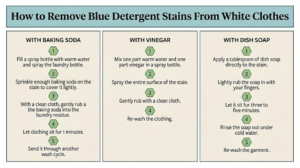
How to Remove Detergent Stains from Clothes Step by Step
The good news is that learning how to remove detergent stains from clothes is straightforward once you know the right approach. The method depends on the type of stain and the severity of the stain, but the following process works for most cases.
Start by scraping off any dried residue with a soft brush or your fingernail. Then, run the stained area under warm water, working from the back of the fabric to push the residue out rather than deeper in. Apply a small amount of white vinegar directly to the stain and allow it to sit for a few minutes — white vinegar is excellent at breaking down soap buildup and can help remove detergent stains effectively.
Next, gently rub the stained area with a bit of baking soda to create a mild abrasive action. After treating the stain with this combination, rinse thoroughly and inspect the fabric. If the stain remains, repeat the process before placing the garment back in the washer. Never put stained clothes in the dryer, as heat will set the stain and make it nearly impossible to remove these stains afterward.
Can White Vinegar and Baking Soda Really Help Get Laundry Detergent Stains Out?
Many people are skeptical about using pantry staples for laundry purposes, but white vinegar and baking soda are genuinely effective at tackling detergent stains from clothes. White vinegar is mildly acidic, which allows it to neutralize the alkaline compounds found in most laundry detergents. When you apply it directly onto the stain, it helps break down the residue so it can be rinsed away more easily.
Baking soda adds a gentle physical scrubbing action while also helping to absorb and neutralize residue. Together, these two ingredients can help get laundry detergent stains out without damaging delicate fabrics. Add half a cup of white vinegar to your rinse cycle as well — this is a particularly effective trick for preventing buildup over time.
It’s worth noting that while these methods involve some elbow grease, they are far gentler than many commercial stain removal products. If you have stained clothes that are especially delicate, always test any treatment on a hidden area first. For very tough stains, you may need to repeat the process two or three times before the stain disappears completely.
What Role Does Your Washing Machine Play in Causing Detergent Stains?
Your washer can actually be a major contributor to detergent stains if it’s not being used correctly. The washing machine relies on the right balance of water, detergent, and fabric to clean effectively. When that balance is off, you end up with residue that defeats the purpose of doing laundry in the first place.
One of the most common mistakes is how and where you pour detergent. If you pour detergent directly onto dry clothes instead of into the designated dispenser, you’re essentially applying a concentrated stain to your fabric before the cycle even begins. Liquid detergent should always go into the drum before adding clothes, or into the detergent drawer — never directly onto the clothing.
Overfilling the washing machine also reduces agitation, which is necessary for a proper rinse. A packed load of laundry won’t move freely enough to wash out all the soap. Additionally, running a wash cycle that’s too short or too cold may not allow powdered laundry detergent to fully dissolve. Use warm water when possible, and make sure your machine’s drum isn’t overloaded if you want to be sure clothes come out stain-free.
How Much Detergent Should You Actually Be Using?
Using too much detergent is one of the leading causes of soap residue on clothing, yet most people use far more than they need. The correct amount of detergent depends on the size of your load, the soil level of the garments, and the water hardness in your area. Most detergent labels actually recommend less than people typically use.
Many detergents don’t mean more cleaning power — in fact, the opposite is often true. Excess soap creates too many suds for the machine to rinse away effectively, and those suds leave behind a filmy residue. Using less detergent and choosing a high-efficiency formula can dramatically reduce the chances of staining your clothes.
Using the correct amount also applies to fabric softener, which can leave its own oily stains if overused or applied incorrectly. Both detergent and fabric softener should be measured carefully. If you’re using laundry pods, use only one pod per normal load — a detergent pod is highly concentrated, and adding more than one can cause significant residue buildup.
Tips for Removing Different Types of Detergent Stains
Not all detergent stains look the same, so tips for removing them vary depending on what you’re dealing with. White streaks are typically caused by undissolved powdered detergent, while blue or purple marks usually come from dyed liquid products. Greasy-looking patches may indicate fabric softener buildup rather than detergent itself.
For white streaks on dark clothing, the most effective approach is to dampen the fabric and use a clean cloth to rub the residue in a circular motion. This friction, combined with moisture, usually loosens the residue enough to rinse away. For dye-based marks, white vinegar applied directly onto the stain, followed by a cold rinse, tends to work well. For greasy patches from fabric softener, try applying a small amount of dish soap directly to the stain before washing.
Stain fighting sometimes means using a different detergent than the one that caused the problem. If you consistently find residue after washing with a particular product, it may be time to switch to a different detergent with a different formula. A clear, dye-free liquid detergent is generally the least likely to leave visible marks. You can also use laundry pods as a premeasured alternative to reduce the risk of using too much detergent.
How to Prevent Detergent Stains on Clothes Before They Start
The best strategy is to prevent detergent stains on clothes from ever occurring. Prevention is easier than treatment, and a few simple adjustments to your laundry habits can make a significant difference. Help prevent detergent stains by always measuring your detergent carefully rather than eyeballing it, and by choosing formulas designed for your water type.
If you live in a hard water area, consider using a water softener or a detergent specifically formulated for hard water. Hard water interferes with the cleaning process and makes it much harder for the detergent to rinse away cleanly. Adding a cup of white vinegar to your rinse cycle once a month can also help prevent buildup in both your machine and your clothes.
Another key tip: don’t skip the pre-wash rinse for heavily soiled items, and avoid piling laundry in the dryer immediately after the cycle ends. Give your washer enough time to complete the full rinse sequence. Help prevent detergent stains on clothes by ensuring that laundry pods are placed at the bottom of the drum, never on top of clothing — this allows the detergent pod to dissolve fully in the water before contacting fabric.
Does the Type of Detergent Matter When It Comes to Staining?
Absolutely — the type of detergent makes a significant difference. Powdered detergent is more likely to leave residue if it doesn’t fully dissolve, particularly in cold water or overloaded machines. Liquid detergent is generally easier to rinse out, but it can leave behind marks if poured directly onto fabric. Detergent pods are convenient and premeasured, but they require sufficient water to dissolve completely.
Detergent is designed to work within specific conditions — the right temperature, the right water volume, and the right load size. When any of these factors is off, the detergent is supposed to clean your clothes, but instead ends up leaving them worse off. Selecting the right formula for your machine type (standard vs. HE), water temperature, and fabric type can significantly reduce the chances of staining.
It’s also worth checking whether your detergent is compatible with your washing machine. High-efficiency washers use less water, meaning they require HE-specific detergents that produce fewer suds. Using a standard detergent in an HE machine can leave substantial residue because there simply isn’t enough water in the cycle to rinse it away completely. Learn how to help get the most from your detergent by always reading the label and following the manufacturer’s guidelines.
When Should You Apply a Pretreatment or Seek Professional Stain Removal?
For most detergent stains, home remedies work perfectly well. However, there are situations where you may need to apply a pretreatment product or consult a professional. If a stain has been through the dryer and been heat-set, it becomes significantly more stubborn and may require a commercial stain removal product or multiple treatment cycles.
Always apply a pretreatment directly to the stain before rewashing, following the instructions on the product label. Gently rub the treatment into the fabric using a clean cloth and allow it to sit for the recommended time before running another wash cycle. Treating the stain thoroughly before rewashing gives the product the best chance of breaking down the residue entirely.
For delicate fabrics like silk, wool, or embellished garments, professional dry cleaning may be the safest route. A dry cleaner can assess the severity of the stain and use appropriate techniques to clean clothes without risking further damage. If you’re dealing with detergent stains from your clothing on a regular basis, however, the real fix is adjusting your laundry habits at home — because stain removal is always harder than prevention.
Professional Laundry Care at The Dutchman’s Laundry
If stubborn detergent stains keep showing up after washing at home, The Dutchman’s Laundry in Clarksville, TN, offers a cleaner, easier solution.
Our family-owned laundromat uses high-efficiency commercial washers and dryers that rinse more thoroughly, helping remove leftover soap residue that can leave blue marks or white streaks on clothing.
Whether you need self-service machines for oversized loads or a convenient wash-and-fold service, our clean facility and reliable equipment help your clothes come out fresh, clean, and ready to wear without the hassle of repeated rewashing.
Visit us today!
Key Takeaways: What to Remember About Detergent Stains
- Use the correct amount of detergent — more soap does not mean cleaner clothes, and using too much detergent is the leading cause of residue stains.
- Never pour detergent directly onto fabric — always use the dispenser drawer or add it to the drum before loading clothes.
- White vinegar is your friend — applied directly onto the stain or added to the rinse cycle, it effectively breaks down soap residue.
- Don’t put stained clothes in the dryer — heat sets stains permanently; always check clothing before drying.
- Match your detergent to your machine — HE washers need HE detergent to avoid excess suds and residue.
- Blue stains come from dye in colored detergents — switch to a clear, dye-free formula to avoid this problem entirely.
- Baking soda and white vinegar together make an effective, gentle stain-fighting treatment for most detergent marks.
- Prevent detergent stains by not overloading the machine, using warm water when possible, and placing pods at the bottom of the drum.
- Repeat the process if the stain doesn’t disappear on the first attempt — persistence pays off.
- When in doubt, switch products — a different detergent may simply work better with your machine, water type, and fabric needs.