Updated: September 14, 2026
How much laundry detergent should you use per load? The right amount depends on the detergent concentration, load size, how dirty the clothes are, your washer type, and even your water conditions.
Using more detergent does not automatically make clothes cleaner. In fact, too much detergent can leave residue on clothing, create excess suds, make rinsing harder, and contribute to buildup inside a washing machine.
The safest starting point is always the detergent manufacturer’s dosing instructions and your washing machine’s recommendations. From there, adjust for the size and condition of the load.
Using a large washer at a laundromat? The Dutchman’s Laundry in Clarksville has multiple washer sizes for everyday and oversized loads. Visit our self-service laundromat in Clarksville if you need a larger machine or help choosing the right washer.
Table of Contents
ToggleQuick Answer: How Much Laundry Detergent Should You Use?
For most loads, start with the amount recommended on the detergent label for your washer type and load size. Do not automatically fill the detergent cap or dispenser to the top.
The amount you need can change depending on:
- Load size: A small load usually needs less detergent than a large or heavily packed load.
- Soil level: Heavily soiled work clothes may need different treatment than lightly worn clothing.
- Detergent concentration: Concentrated formulas can require much smaller amounts than standard detergents.
- Washer type: High-efficiency washers are designed to work with low-sudsing HE detergent.
- Water conditions: Hard or soft water can affect how detergent performs and rinses.
Important: Treat the instructions on the detergent container as your primary dosing guide because formulas vary considerably between brands and products.
How Much Detergent to Use Per Load
If you are wondering how much detergent to use per load, there is no single measurement that works for every washer, detergent, and load of laundry.
A better approach is to match the detergent dose to the actual load:
| Load Type | Detergent Approach |
|---|---|
| Small, lightly soiled load | Use the lower end of the detergent manufacturer’s recommended amount. |
| Normal everyday load | Use the standard amount listed for your washer and load size. |
| Large load | Follow the manufacturer’s large-load recommendation rather than simply doubling the dose. |
| Heavily soiled clothes | Pretreat stains first and follow the detergent label for heavily soiled laundry. |
| HE/front-load washer | Use HE-compatible detergent and the amount recommended for an HE machine. |
If the clothes are heavily stained, adding much more detergent is usually not the best solution. Pretreating the stain is often more useful than creating an overly soapy wash.
For stain-treatment guidance, see our guide to removing stains from clothes.
How Much Detergent to Use in an HE Washer
High-efficiency washers use less water than many traditional washing machines. Because of that, they are designed to work with HE detergent, which produces fewer suds and rinses efficiently in lower-water conditions.
Do not assume that a full detergent cap is necessary. Concentrated HE detergents may require only a relatively small measured dose.
For an HE washer:
- Use detergent marked for HE machines.
- Follow the product’s HE dosing instructions.
- Measure the detergent instead of estimating.
- Increase the dose only when the product instructions recommend it for a larger or dirtier load.
- Avoid adding extra detergent just because the washer looks large.
How Much Detergent to Use in a Front-Load Washer
Most modern front-load washers are high-efficiency machines. They use less water and rely on tumbling action rather than filling a large tub with water.
That means excess detergent can become a problem quickly. Too much can create unnecessary suds and make it harder for the washer to rinse detergent completely from clothes.
Instead of following a blanket rule such as “always use half a cap,” check the detergent label for the amount specifically recommended for HE or front-load washers.
Detergent formulas have different concentrations, so one brand’s correct dose may be very different from another’s.
How Much Detergent to Use in a Top-Load Washer
Top-load washers also vary. Traditional top loaders may use considerably more water than newer HE top-load machines.
If your machine has an HE symbol or requires HE detergent, follow HE dosing instructions even though it loads from the top.
For a traditional top-load washer, follow the detergent label based on:
- the washer type,
- load size,
- soil level, and
- detergent concentration.
Avoid assuming that every top-loading machine requires a full cap of detergent.
How Much Detergent for Small, Medium, and Large Loads?
Load size matters, but detergent should not increase automatically at the same rate as washer capacity.
Small Loads
For a small load of lightly worn clothes, start with the lowest recommended dose on the detergent label. Using a large amount of detergent in a small amount of laundry can make rinsing more difficult.
Medium or Regular Loads
Use the manufacturer’s normal-load recommendation. This is usually the best starting point for everyday shirts, pants, underwear, socks, towels, and similar laundry.
Large Loads
Use the product’s large-load instructions. Avoid simply doubling or tripling the detergent because the washer is larger.
The clothes still need enough space to move and enough water to rinse. An overloaded machine combined with excessive detergent can leave both dirt and detergent trapped in the load.
How Much Detergent to Use at a Laundromat
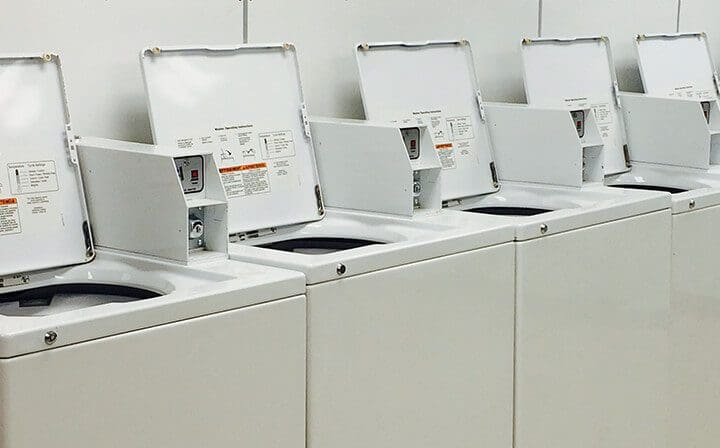
Laundromats often have much larger washers than the machines people use at home. At The Dutchman’s Laundry, customers may use machines designed for several loads of laundry at once.
The important thing is not to assume that a machine described as a multi-load washer requires the same multiple of detergent.
When using a laundromat washer:
- Check the machine instructions first.
- Check the detergent manufacturer’s dosing instructions.
- Use HE detergent when the machine requires it.
- Consider how full the washer actually is rather than only its maximum capacity.
- Ask the laundromat attendant if you are unsure how much detergent to add.
If you are visiting us in Clarksville, our attendants can help you choose an appropriate washer for your load. You can also learn more about our large-capacity laundromat equipment.
What Happens If You Use Too Much Laundry Detergent?
More detergent can actually create new laundry problems instead of solving them.
Using too much detergent may contribute to:
- detergent residue on clothes,
- stiff or sticky-feeling fabric,
- excess suds,
- poor rinsing,
- musty washer odors,
- detergent buildup inside the machine, and
- extra rinse cycles that waste time and water.
If you suspect detergent has already accumulated inside your machine, read our guide on how to remove detergent buildup in a washing machine.
Signs You May Be Using Too Much Detergent
You may want to reduce the amount of detergent you use if you regularly notice:
- visible soap or suds late in the rinse cycle,
- white or sticky residue on clean clothes,
- clothes that feel stiff after washing,
- a strong detergent smell even after rinsing,
- repeated washer buildup, or
- detergent stains or marks on fabric.
If detergent residue has already marked clothing, see our guide on how to get laundry detergent stains out of clothes.
Can You Use Too Little Laundry Detergent?
Yes. Using too little detergent can also reduce cleaning performance, especially when a load contains body oils, food residue, outdoor dirt, or heavily soiled work clothes.
The goal is not to use the smallest possible amount. The goal is to use the correct amount for the specific load.
Start with the detergent manufacturer’s recommendation and adjust only when the product instructions, load size, soil level, washer, or water conditions call for it.
Does Hard Water Change How Much Detergent You Need?
Water hardness can affect detergent performance. Minerals in hard water can make cleaning more difficult, while very soft water can allow detergent to create suds more easily.
Some detergent manufacturers provide different dosing recommendations for different water conditions. If yours does, follow those instructions.
If you consistently notice residue, poor cleaning, or unusual amounts of suds despite measuring correctly, your water conditions may be one factor worth considering.
Liquid Detergent vs. Powder vs. Pods
Different detergent formats should not be measured the same way.
Liquid Detergent
Measure liquid detergent using the markings provided by the manufacturer. Avoid pouring directly from the bottle without measuring because it is easy to use too much.
Powder Detergent
Use the scoop or measurement provided with the product and follow its instructions for your load size and washer type.
Laundry Pods
Pods are premeasured, so follow the manufacturer’s instructions for the number of pods recommended for the load. Do not cut or open pods to adjust the amount.
If you are unsure which detergent format is best for your laundry, read our guide on how to choose a laundry detergent.
Does More Detergent Make Clothes Cleaner?
No. Once you have enough detergent to clean the load effectively, adding extra detergent does not necessarily improve cleaning.
Excess product may actually make it harder for your washer to rinse clothing thoroughly.
For heavily soiled or stained clothes, a better approach is usually to:
- pretreat visible stains,
- choose an appropriate wash cycle,
- use the correct water temperature for the fabric,
- avoid overloading the washer, and
- use the detergent dose recommended for the load.
How to Measure Laundry Detergent Correctly
A simple measuring routine can prevent both detergent waste and residue:
- Check whether your washer is HE or standard.
- Read the detergent label. Find the dosing instructions for your machine.
- Check your load size. Small, normal, and large loads may require different amounts.
- Consider how dirty the laundry is. Pretreat heavy stains when possible.
- Measure the product. Do not estimate by eye.
- Add detergent to the correct compartment or location. Follow your washer’s instructions.
- Watch the results. Persistent residue or excessive suds can indicate that something needs adjusting.
How to Avoid Detergent Buildup
Detergent buildup is easier to prevent than to clean later.
- Measure detergent every time.
- Use HE detergent in HE machines.
- Do not routinely add extra detergent to dirty loads.
- Avoid overloading the washer.
- Use the correct detergent dispenser.
- Allow the washer to rinse properly.
- Follow your machine’s cleaning and maintenance instructions.
Using Detergent at The Dutchman’s Laundry in Clarksville
If you are using an unfamiliar laundromat machine, there is no need to guess.
The Dutchman’s Laundry serves Clarksville customers with self-service washers in multiple sizes, including machines suitable for larger household and bedding loads.
Visit our self-service laundromat in Clarksville, or learn about our drop-off laundry service if you would rather have your laundry handled for you.
Not sure which washer or how much detergent to use? Ask one of our attendants when you visit The Dutchman’s Laundry. Choosing the right machine and detergent amount can help clothes wash and rinse more effectively.
Frequently Asked Questions
How much laundry detergent should I use per load?
Use the amount recommended by the detergent manufacturer for your washer type, load size, and soil level. Because detergents have different concentrations, there is no universal amount that works for every product.
How much detergent should I use in a front-load washer?
Most modern front-load washers are high-efficiency machines. Use an HE-compatible detergent and follow the detergent manufacturer’s HE or front-load dosing instructions rather than automatically using a full cap.
How much detergent should I use in an HE washer?
Use HE detergent and follow its dosing directions for the size and soil level of your load. Concentrated HE detergents may require much less product than you expect.
How much detergent should I use for one load of laundry?
Start with the manufacturer’s normal-load recommendation. Adjust only if the label provides different instructions for a small, large, heavily soiled, or hard-water load.
Do large washers need more detergent?
Not automatically. A larger washer can hold more laundry, but the correct dose depends on how much laundry is actually in the machine, the detergent concentration, the washer type, and the manufacturer’s instructions.
Can too much detergent make clothes dirty?
Too much detergent can make rinsing less effective and may leave residue behind. This can make clothes feel stiff, sticky, or less fresh even after washing.
Why is detergent still on my clothes after washing?
Possible causes include using too much detergent, overloading the washer, incorrect detergent for the machine, or an insufficient rinse. Reducing excess product and following the washer and detergent instructions may help.
Should I use more detergent for very dirty clothes?
Follow the detergent label’s heavily soiled-load instructions. For stains or concentrated dirt, pretreatment is often better than simply adding a large amount of extra detergent.
Is liquid or powder detergent better?
Both can clean effectively when used correctly. The best choice depends on the load, washing conditions, detergent formula, and personal preference. Always follow the specific product’s instructions.
Key Takeaways
- There is no single detergent measurement that works for every load or detergent brand.
- Start with the manufacturer’s dosing instructions.
- Use HE detergent in high-efficiency machines.
- Measure detergent instead of estimating.
- Do not assume that more detergent means cleaner clothes.
- Pretreat heavily soiled areas instead of relying only on extra detergent.
- Large laundromat washers do not automatically require the maximum possible detergent dose.
- Excess detergent can contribute to residue, suds, poor rinsing, and washer buildup.
For more laundry advice, visit our laundry tips blog or stop by The Dutchman’s Laundry in Clarksville, TN.
Written by
TDL Team
The laundry professionals behind The Dutchman’s Laundry in Clarksville, TN — family-owned since 2015. We share practical laundry tips based on what we see and solve every day in our laundromat.