
Updated: August 13, 2026
White stains on clothes after washing are often not traditional stains at all. They may be detergent residue, mineral buildup from hard water, deodorant or antiperspirant residue, lint, or another laundry product that did not rinse away completely.
These marks are especially noticeable on black, navy, and other dark-colored clothes, where even a small amount of white residue can stand out.
This guide explains how to remove white stains from clothes, how to figure out what caused them, what to do when white marks appear after washing, and when a pale spot may actually be permanent color loss rather than removable residue.
Important: This article is about white marks, spots, streaks, and residue appearing on clothing. If you are trying to remove coffee, grease, blood, grass, or another stain from white clothing, see our guide to removing stains without bleach instead.
Quick Answer: How Do You Remove White Stains From Clothes?
Start by identifying what the white mark looks and feels like.
- Powdery or chalky residue after washing: Rinse or rewash the garment without adding more detergent.
- White streaks on black or dark clothing: Detergent or laundry-product residue is a common possibility.
- White marks around the underarms: Deodorant or antiperspirant buildup may be responsible.
- Chalky residue that keeps returning: Hard-water minerals may be contributing.
- Fuzzy white particles: Check for lint, tissue, or paper that broke apart in the wash.
- A pale spot that does not rinse away: The fabric dye may have been lightened or damaged rather than covered by residue.
- Orange, reddish-brown, or yellow-brown marks: These may be rust or iron-related stains rather than white mineral residue.
Always check the garment’s care label before rewashing, soaking, brushing, or applying another product.
Why Do White Stains Appear on Clothes?
White marks can have several different causes, and the correct treatment depends on identifying the source first.
1. Laundry Detergent Residue
Detergent that does not fully dissolve or rinse away can leave white streaks, spots, or powdery residue on clothing.
This is particularly visible on black and dark fabrics.
Possible contributing factors include:
- Using more detergent than the product recommends
- Overloading the washing machine
- Powder detergent not dissolving completely
- Insufficient rinsing
- Using a detergent incorrectly for the washer
- Hard-water minerals interacting with laundry products
If the white mark appeared immediately after washing and feels powdery or soapy, detergent residue should be one of the first things you check.
2. Hard-Water Mineral Residue
Hard water contains dissolved minerals that can contribute to residue on clothing and inside washing machines.
Mineral-related residue may appear:
- Chalky
- Powdery
- White or pale gray
- More noticeable on dark fabrics
If you also notice mineral buildup around faucets, showerheads, or other places where water dries, hard water may be contributing to the laundry problem.
Pay attention to the color of the mark. Hard-water residue is usually pale, white, or chalky. If your clothes instead develop orange, reddish-brown, or yellow-brown spots, iron or rust may be involved.
If rust-colored marks repeatedly appear after washing, see our guide on removing rust stains from clothes. It also explains how iron in water, plumbing, or other metal sources can contribute to recurring rust-colored laundry stains.
3. Deodorant or Antiperspirant Residue
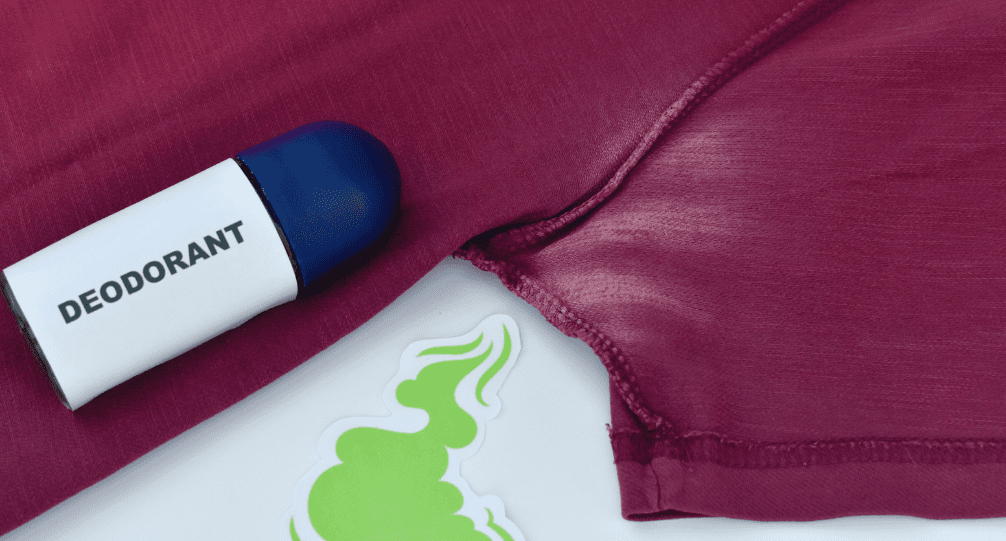
White marks around the underarms of shirts, dresses, and other tops may come from deodorant or antiperspirant transferring onto the fabric.
Fresh deodorant marks may sit mostly on the surface. Repeated buildup can become harder to remove and may combine with body oils and laundry residue.
4. Fabric Softener or Other Laundry Products
Laundry additives that are not properly dispensed or diluted according to their instructions may leave localized marks or residue.
If the spot appeared immediately after a wash in which you used a new detergent, fabric softener, scent booster, or other laundry additive, consider whether that product may be involved.
5. Lint, Tissue, or Paper Residue
Sometimes white “stains” are actually particles sitting on top of the fabric.
A tissue, receipt, paper towel, or other paper item left in a pocket can break apart during washing and cover dark clothing with small white pieces.
Lint from towels or other fabrics can create a similar appearance.
6. Actual Color Loss
Not every white spot can be washed away.
If chlorine bleach or another product that affects dye contacts colored fabric, the resulting pale patch may represent lost color rather than residue on top of the fabric.
If the spot remains exactly the same after thorough rinsing and the fabric itself looks lighter, consider whether the dye may have changed.
For more guidance on bleach and colored fabric, see our guide explaining whether you can use bleach on colored clothes.
How to Tell What Caused a White Mark
| What You See | Possible Cause | What to Try First |
|---|---|---|
| Powdery white streaks after washing | Detergent residue | Rinse or rewash without adding more detergent |
| Chalky residue on dark clothes | Detergent or hard-water minerals | Rinse thoroughly and check detergent usage |
| White marks around underarms | Deodorant or antiperspirant | Gently loosen surface residue before washing |
| Small white particles everywhere | Lint, tissue, or paper | Shake, brush, or rewash the garment |
| Greasy or waxy pale mark | Laundry additive or personal-care product | Use a fabric-safe pretreatment appropriate for the residue |
| Permanent pale patch with no surface residue | Possible dye loss | Stop stain treatments and assess the fabric |
| Orange or reddish-brown spots | Possible rust or iron staining | Use a rust-specific treatment rather than a white-residue treatment |
How to Remove White Stains From Clothes After Washing
If you notice white marks when you take clothes out of the washer, do not immediately add more detergent.
- Check the care label. Make sure the garment can be rewetted or machine washed.
- Inspect the mark. Determine whether it is powdery, waxy, chalky, fuzzy, orange-brown, or actually lighter than the surrounding fabric.
- Brush away loose residue. Remove lint, tissue, powder, or other loose material gently.
- Rinse the affected area. For washable garments, clean water may remove surface residue.
- Rewash if necessary. Use the appropriate cycle and avoid automatically adding another full dose of detergent.
- Inspect before drying. Make sure the mark is gone before using dryer heat.
If the white mark returns repeatedly, investigate the detergent amount, washer loading, water hardness, and other laundry products instead of continually treating the garment itself.
If the recurring marks are orange or brown rather than white, investigate possible iron or rust sources and use our rust stain removal guide instead.
How to Remove White Detergent Residue From Clothes
If you believe detergent is responsible, start with the least aggressive solution.
- Brush or shake off any loose powder.
- Rinse the affected area thoroughly if the garment allows it.
- Gently work the fabric with your fingers to help release trapped residue.
- Rewash the garment according to its care label.
- Avoid adding another excessive detergent dose.
- Inspect the garment before drying.
If detergent residue is a recurring problem, check whether you are using the amount recommended for your detergent, washer, load size, and water conditions.
For a deeper explanation, read our guide to removing laundry detergent stains from clothes.
How to Remove White Stains From Black Clothes
White residue is often particularly obvious on black clothing.
If white marks appear on black clothes after washing:
- Shake or brush away loose lint or powder.
- Rinse the affected area with water if allowed by the care label.
- Turn the garment inside out before rewashing.
- Use the correct amount of detergent rather than automatically adding extra.
- Avoid overcrowding the washer so clothing has room to move and rinse.
- Inspect the fabric before drying.
If the area is not powdery and the black dye itself appears lighter, washing may not solve the problem because the mark may be color loss rather than surface residue.
Why Do Dark Clothes Have White Marks After Washing?
White marks on dark clothing commonly become noticeable because dark fabric provides strong contrast against even small amounts of pale residue.
Check for:
- Undissolved detergent
- Excess laundry product
- Hard-water residue
- Lint from lighter fabrics
- Tissue or paper left in pockets
- Deodorant transfer
- Actual fading or bleach damage
The appearance of the mark usually gives a clue. Powder or lint can often be physically removed, while a uniformly lighter patch may indicate a change to the dye itself.
How to Remove White Deodorant Marks From Clothes
For a fresh surface deodorant mark, begin gently rather than soaking the garment in multiple cleaning products.
- Check the garment care label.
- Gently rub the fabric against itself or use a clean, dry cloth to loosen surface residue.
- If residue remains and the garment is washable, rinse the affected area.
- Apply a small amount of appropriate laundry detergent if needed.
- Wash according to the garment’s instructions.
- Check the area before drying.
Repeated underarm buildup may require more than simply wiping the surface because deodorant can combine with sweat and body oils over time.
How to Remove Hard-Water Residue From Clothes
If hard water appears to be contributing to white or chalky laundry residue, simply adding more and more detergent may not solve the underlying problem.
Start by:
- Following the detergent manufacturer’s dosage guidance for your water conditions
- Avoiding washer overload
- Using the water temperature allowed by the garment care label
- Ensuring powder detergent dissolves properly
- Considering a laundry product specifically intended for hard-water conditions when appropriate
A diluted white-vinegar treatment may be useful for certain washable fabrics affected by detergent or mineral residue, but check the garment instructions first and make sure the treatment is compatible with your washing machine and laundry products.
Never use vinegar as part of a treatment involving chlorine bleach.
If the discoloration is orange, red-brown, or yellow-brown rather than chalky white, do not assume it is ordinary hard-water residue. Iron-related staining requires a different approach.
What If the White Spots Will Not Come Out?
If repeated rinsing does not change the appearance of the spot, inspect the fabric more closely.
Ask:
- Can you feel residue sitting on the fabric?
- Does powder transfer onto a dark cloth or your fingers?
- Did the mark appear immediately after washing?
- Was chlorine bleach or another strong laundry product used?
- Is the actual fabric color lighter in that area?
If the fabric itself has changed color, the issue may not be a removable stain.
Bleach-related dye loss, fading, abrasion, or other permanent fabric changes cannot usually be corrected by repeatedly washing the garment.
What Causes Small White Spots or Dots on Clothes?
Small white spots can have several causes.
- Powder detergent that did not dissolve completely
- Hard-water residue
- Lint
- Tissue or paper fragments
- Dried deodorant or personal-care products
- Localized color loss
Before applying a stain remover, try to determine whether the white material is actually sitting on the fabric or whether the fabric itself has turned lighter.
Why Are There White Patches on Clothes?
A large white or faded patch should be treated differently from powdery residue.
If the patch appeared after exposure to bleach or another product capable of changing fabric dye, the discoloration may be permanent.
If the patch feels stiff, chalky, or coated, rinse the area and investigate detergent or mineral residue first.
Does Vinegar Remove White Stains From Clothes?
White vinegar may help with some washable garments affected by detergent or mineral residue, but it is not a universal treatment for every white mark.
Do not automatically use vinegar on:
- Every fabric type
- Unknown stains
- Items whose care labels prohibit the treatment
- Any laundry treatment involving chlorine bleach
Often the safest first step for suspected detergent residue is simply rinsing the garment thoroughly and correcting the washing conditions that created the residue.
Does Baking Soda Remove White Stains?
Baking soda can be useful in some laundry situations, but a white mark does not automatically require baking soda.
If the problem is undissolved detergent or loose mineral residue, adding another powder to the garment may not be the most logical first treatment.
Identify the cause before choosing a cleaning product.
Do Not Mix Laundry Chemicals to Treat White Marks
Using several household products at the same time does not make stain removal more effective and can create unnecessary risks.
In particular, never mix chlorine bleach with vinegar, ammonia, acids, or other household cleaners.
Use one treatment at a time, rinse thoroughly when appropriate, and follow the instructions on both the garment and cleaning product.
How to Prevent White Marks on Clothes After Washing
- Measure detergent: Follow the detergent manufacturer’s directions instead of guessing.
- Do not overload the washer: Clothes need enough room for water and detergent to circulate and rinse away.
- Use laundry products correctly: Follow dispenser and product instructions.
- Empty pockets: Tissues and paper can break apart and coat a load with white particles.
- Sort carefully: Lint-producing fabrics can transfer fibers to dark clothing.
- Check your water: If mineral residue appears elsewhere in the home, hard water may be contributing.
- Watch for rust-colored staining: Repeated orange or brown marks may point to iron, plumbing, or another metal source rather than ordinary white mineral residue.
- Clean the washer as directed: Follow the machine manufacturer’s maintenance instructions.
- Inspect before drying: Deal with residue before it goes through another laundry cycle.
Common Mistakes When Removing White Stains
- Assuming every white mark is a stain: Some are detergent, minerals, lint, or lost dye.
- Adding more detergent: If detergent residue caused the problem, this can make matters worse.
- Mixing vinegar and bleach: Never combine chlorine bleach with other household cleaners.
- Using bleach because the mark is white: Bleach is not a general-purpose treatment for white residue.
- Treating rust like mineral residue: Orange or brown iron-related stains require a different treatment from white hard-water deposits.
- Scrubbing delicate fabric aggressively: Friction may damage fibers or appearance.
- Ignoring the care label: The garment’s instructions should guide treatment and washing.
- Drying before identifying the problem: Inspect the garment first so you know whether more treatment is needed.
What If You Mean a Stain on White Clothes?
There is an important difference between a white stain on clothes and a stain on white clothes.
This page focuses on white residue, marks, spots, streaks, and patches appearing on clothing.
If you are trying to remove something like:
- Coffee from a white shirt
- Grease from white clothing
- Blood from white fabric
- Grass stains
- Food stains
- Old stains from white clothes
- Rust stains from white or colored fabric
use a stain-specific treatment instead. Start with our guide to removing stains without bleach, use our rust stain removal guide for orange or brown iron-related marks, or choose the relevant stain-removal guide from our laundry tips.
Need Help With Washable Laundry in Clarksville?
If white marks keep appearing after you wash your clothes, the issue may be the detergent, washing method, load size, water conditions, or residue rather than a permanent stain.
The Dutchman’s Laundry offers drop-off wash and fold service in Clarksville for ordinary washable laundry.
You can also use our self-service laundromat in Clarksville if you prefer to handle your own washing and rinsing.
For valuable, delicate, dry-clean-only, or visibly damaged garments, confirm the appropriate care method before treating them as ordinary washable laundry.
Frequently Asked Questions About White Stains on Clothes
Why do my clothes have white stains after washing?
White stains after washing may be caused by detergent residue, hard-water minerals, lint, tissue, deodorant, another laundry product, or a change to the fabric’s dye. Inspect the texture and location of the mark before choosing a treatment.
How do you get white stains out of black clothes?
If the mark is powdery or sitting on top of the fabric, brush away loose material, rinse the area, and rewash according to the care label. If the black fabric itself has become lighter, the problem may be color loss rather than residue.
Why do black clothes have white marks after washing?
Dark fabrics make small amounts of pale residue particularly visible. Check for detergent, hard-water deposits, lint, tissue, deodorant, and improperly dispensed laundry products.
How do you remove white detergent stains from clothes?
Start by rinsing the affected area and rewashing the garment according to its care label without automatically adding more detergent. If the problem keeps returning, check detergent dosage, washer loading, and water conditions.
What causes white residue on clothes after washing?
Possible causes include detergent that did not fully dissolve or rinse away, minerals associated with hard water, laundry additives, lint, or paper left in pockets.
How do you remove white deodorant marks?
For fresh surface residue, gently loosen the mark with the fabric or a clean cloth. If necessary and the garment is washable, rinse the area and wash according to the care label.
Can hard water leave white marks on clothes?
Hard-water minerals can contribute to visible residue on fabrics, particularly when combined with some laundry products. Correct detergent usage and proper rinsing are important when hard water is involved.
Can rust look like a hard-water stain on clothes?
They can sometimes be confused, but the colors usually differ. Hard-water or detergent residue often looks white, pale gray, or chalky, while iron-related rust stains are more commonly orange, reddish-brown, or yellow-brown. Rust should be treated with a rust-specific method rather than ordinary residue removal.
Does vinegar remove white residue from clothes?
A diluted white-vinegar treatment may help with certain detergent or mineral residues on compatible washable fabrics. Check garment and appliance instructions first, and never combine vinegar with chlorine bleach.
Why are there small white dots on my clothes?
Small white dots may be detergent particles, minerals, lint, tissue fragments, dried personal-care products, or areas where the dye has changed. Determine whether the material can be brushed or rinsed away before applying another cleaner.
Why won’t the white stain come out?
If the mark does not change after thorough rinsing and there is no residue sitting on the fabric, the color of the fabric itself may have changed. Bleach damage or other dye loss cannot usually be removed like an ordinary stain.
Are white stains on clothes the same as stains on white clothes?
No. A white stain refers to a pale mark or residue appearing on a garment. A stain on white clothes could be coffee, grease, blood, food, grass, rust, or another substance and may require a completely different treatment.
Written by
TDL Team
The laundry team behind The Dutchman’s Laundry in Clarksville, TN. We share practical laundry guidance based on the questions and laundry problems customers bring to our laundromat.