
Quick answer: To remove a stain from a comforter or another bulky washable item, check its care label, remove any excess material, blot instead of rubbing, and pretreat the affected area with a product that is safe for the fabric. Wash the item in a machine large enough for it to move freely. Before using a dryer, check whether the stain is gone because dryer heat can make some remaining stains harder to remove.
Stain removal becomes more complicated when the affected item is a king-size comforter, thick blanket, quilt, mattress pad, sleeping bag, or washable area rug. These items hold more water, need more room in the washer, and may contain filling or backing that requires special care.
This guide explains how to remove stains from bulky bedding safely, which treatment to use for common stains, and when a large-capacity laundromat is the better option.
Before Treating a Stain, Check the Care Label
The care label should determine how you clean a comforter or bulky item. Check whether the item is:
- Machine washable
- Hand-wash only
- Dry-clean only
- Suitable for chlorine or non-chlorine bleach
- Safe for tumble drying
- Restricted to cold, warm, or another specific water temperature
Comforters can contain down, down alternative, polyester, cotton, wool, silk, or a combination of materials. A cleaning method that works on a washable polyester blanket could damage a wool quilt, silk cover, down filling, waterproof coating, or rubber rug backing.
If the label is missing or unreadable, test any treatment on a small, hidden area and ask a laundry professional before washing the entire item.
How to Remove Stains From a Comforter: Step by Step
1. Act Before the Stain Dries
Treat the stain as soon as practical. Fresh stains are generally easier to remove than stains that have dried, oxidized, or passed through a heated dryer.
If the spill is wet, press a clean white towel against it to absorb excess liquid. Work from the outside edge toward the center so the stain does not spread farther across the fabric.
2. Remove Excess Material
Use a spoon, dull knife, or the edge of a card to lift away food, mud, waxy material, or other solids. Avoid grinding the material into the comforter’s fibers or filling.
For dirt and pet debris, shake or brush away as much loose material as possible before applying water or a cleaning product.
3. Move the Filling Away From the Stain When Possible
If the comforter’s construction allows it, gently move the inner filling away from the stained section before spot treatment. This helps keep the cleaning solution concentrated on the outer fabric instead of saturating the filling unnecessarily.
Do not pull, cut, or open stitched sections to reach a stain.
4. Test the Treatment
Apply a small amount of the proposed stain remover to an inconspicuous section. Wait according to the product instructions, rinse or blot it away, and check for:
- Color loss
- Color transfer
- Fabric distortion
- Changes in texture
- Damage to printed or decorative finishes
Stop if the fabric reacts poorly.
5. Pretreat the Stained Area
Apply a mild liquid laundry detergent or stain-removal product that is suitable for the stain and permitted by the care label. Use only the amount recommended on the product label.
Gently work the treatment into the outer fabric with your fingers, a clean cloth, or a soft brush when appropriate. Avoid aggressive scrubbing, which can spread the stain, weaken fibers, or damage the comforter’s surface.
6. Allow the Treatment Time to Work
Follow the stain remover’s directions for treatment time. Do not allow a product to dry on the fabric unless its instructions specifically permit it.
Leaving bleach, concentrated detergent, hydrogen peroxide, or another treatment on a fabric longer than directed does not necessarily produce better results and may cause fading or fiber damage.
7. Rinse or Wash According to the Label
Rinse the treated area if required, then wash the entire item using the temperature, cycle, and detergent specified by its care label.
A comforter needs enough room to circulate through the wash water. If it is compressed tightly against the drum, it may not wash or rinse evenly. A commercial or large-capacity washer may be necessary for king-size comforters, thick quilts, and oversized blankets.
8. Inspect the Stain Before Drying
Check the stained area as soon as the wash cycle ends. If discoloration remains, repeat an appropriate pretreatment and wash process before using heated drying.
The American Cleaning Institute’s stain-removal guidance recommends repeating treatment when a stain remains and avoiding the dryer until it has been removed.
9. Dry the Item Completely
Follow the care label when selecting dryer heat. Some comforters require low or no heat, while other items must be air-dried.
When tumble drying is permitted, use a dryer that provides enough space for the comforter or blanket to tumble. Pause periodically to reposition the item and redistribute its filling. Thick bedding can feel dry on the surface while retaining moisture inside, so check several sections before folding, storing, or returning it to the bed.
Stain Treatment Guide for Bulky Bedding
| Stain Type | Recommended First Action | What to Avoid |
|---|---|---|
| Food or tomato-based sauce | Lift away solids, flush the back of the stain with cool water, and pretreat with liquid laundry detergent or a fabric-safe stain remover. | Do not rub the food farther into the fabric or dry the item while discoloration remains. |
| Oil or grease | Blot excess oil and pretreat with a product labeled for grease or an appropriate liquid detergent. | Do not add water before removing excess oil, and do not use dryer heat until the stain is gone. |
| Blood | Rinse with cold water and use an enzyme-based pretreatment if both the product and bedding label permit it. | Avoid hot water and heated drying while the stain remains. |
| Coffee, juice, or red wine | Blot immediately, rinse according to the care label, and apply an appropriate laundry stain remover. | Do not scrub outward or use chlorine bleach unless the label specifically permits it. |
| Pet urine or vomit | Remove solids, blot liquid, rinse with cool water, and use a laundry product formulated for biological or pet stains when safe for the fabric. | Do not mix cleaning chemicals or place a heavily soiled item directly into a public washer without removing excess contamination. |
| Mud or dirt | Remove loose dirt, scrape away dried clumps, and pretreat the remaining mark with detergent. | Do not grind dirt deeper into the fabric with forceful scrubbing. |
| Makeup or ink | Blot carefully and use a stain product specifically labeled for the substance and fabric. | Do not spread the stain with a wet cloth or use an untested solvent on delicate material. |
| Unknown stain | Blot, photograph the stain, test a gentle treatment in a hidden area, and ask a professional when necessary. | Do not combine several chemicals in an attempt to identify or remove it. |
For more detailed stain-specific instructions, see our guides to removing BBQ sauce stains and red wine stains.
Can You Use Bleach on a Comforter?
Use bleach only when the comforter’s care label and the bleach product label both allow it. Chlorine bleach can remove color, weaken some fibers, damage filling, or create uneven patches. A white outer fabric does not automatically mean the entire comforter is bleach-safe.
If the label permits only non-chlorine bleach, use an oxygen-based product according to its directions. If the label prohibits bleach, choose another fabric-safe treatment.
Important safety warning: Never mix household bleach with another cleaner or disinfectant. In particular, bleach should never be combined with ammonia, acids, or vinegar. The CDC warns that mixing bleach with other cleaners can release dangerous vapors.
Stain Removal by Bulky Item Type
Comforters and Duvets
Remove a washable duvet cover and treat it separately from the comforter insert. Check the insert for loose stitching, tears, and filling that has shifted before washing.
For a localized stain, pretreat only the affected outer fabric when possible. According to Whirlpool’s comforter-washing guidance, a comforter should have enough room to agitate and tumble in a large-capacity washer.
Down Comforters
Follow the manufacturer’s care label because some down comforters are machine washable while others require a different method. When machine washing is permitted, use the recommended gentle detergent, cycle, water temperature, and drying method.
Down filling must be dried thoroughly. Damp clusters can remain inside even when the shell feels dry. Low or no heat may be appropriate when the label permits tumble drying, but the item may require additional air-drying time.
Blankets and Quilts
Inspect quilts for loose seams, fragile stitching, color transfer, and aging fabric. An older handmade quilt may not tolerate the same pretreatment, agitation, or dryer heat as a modern machine-washable blanket.
Pretreat stains conservatively, avoid aggressive brushing, and use the cycle stated on the label.
Weighted Blankets
Check the blanket’s weight, filling, outer material, removable-cover instructions, and manufacturer limits. A weighted blanket may exceed the safe capacity of a home or commercial machine even when it physically fits inside.
Some weighted blankets allow only the cover to be machine washed. Others require hand washing or spot cleaning. Ask an attendant before placing one in a laundromat machine.
Sleeping Bags
Follow the sleeping bag manufacturer’s directions, particularly for down fill, water-resistant coatings, insulation, and dryer settings. Empty the pockets, loosen drawstrings, and check zippers and fasteners before washing.
Use only products permitted by the care instructions because fabric softener, bleach, or an unsuitable detergent may affect specialized materials.
Pet Bedding and Blankets
Shake off loose pet hair outdoors, remove solid debris, and pretreat visible stains before washing. Items with substantial contamination should be discussed with the laundromat attendant before they are placed in a public machine.
See our laundromat guide for pet owners for additional preparation and machine-use tips.
Washable Area Rugs
Only wash an area rug when its care label allows machine washing and its size and saturated weight are suitable for the machine. Rubber-backed rugs, delicate fibers, handmade rugs, and items with deteriorating backing may require another cleaning method.
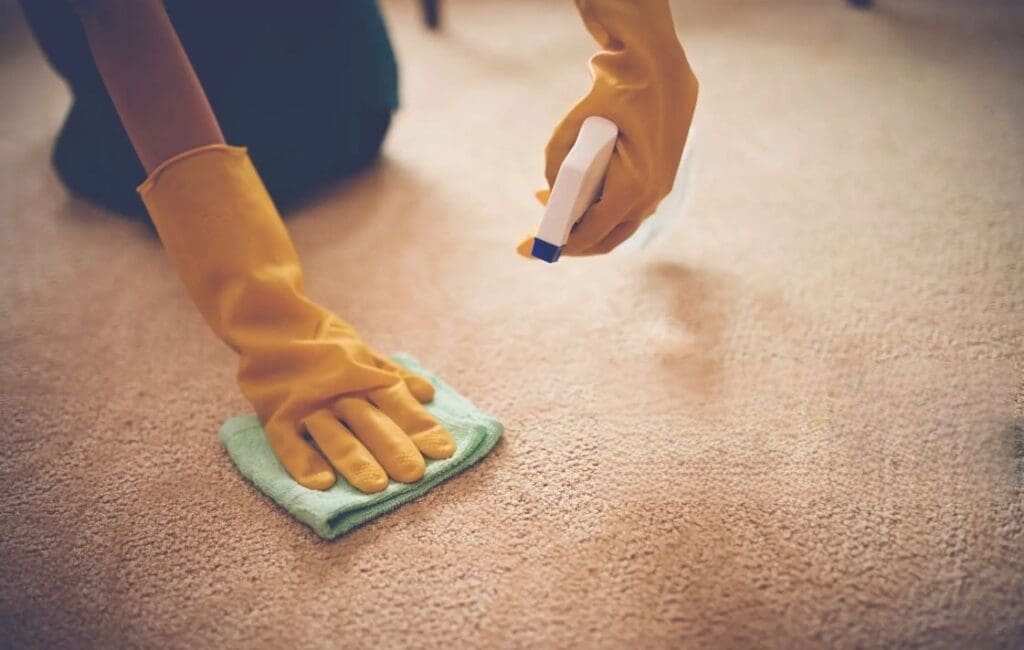
Wall-to-wall carpet is not a bulky laundry item and should not be placed in a washing machine. Use an appropriate carpet-cleaning method or service instead.
Common Bulky-Item Stain Removal Mistakes
- Ignoring the care label: The fabric, filling, backing, and construction may each have different limitations.
- Using a washer that is too small: A tightly packed comforter may wash and rinse unevenly.
- Using too much detergent: Thick bedding can retain detergent and may be difficult to rinse completely.
- Scrubbing aggressively: Forceful rubbing can spread a stain, distort fabric, or damage stitching.
- Using hot water automatically: The correct temperature depends on the stain and the item’s care instructions.
- Applying bleach without checking: Bleach can discolor or damage fabrics and fillings that are not bleach-safe.
- Mixing household cleaners: Chemical combinations can damage the item and create serious safety risks.
- Drying before checking the stain: Heat can make some remaining stains more difficult to remove.
- Storing the item while damp: Thick filling and folded layers can retain moisture after the surface feels dry.
When Should You Use a Laundromat for Bulky Bedding?
A laundromat may be the better choice when:
- The comforter cannot move freely inside your home washer.
- The wet item would exceed your washer’s capacity.
- You need a commercial dryer with room for even tumbling.
- You have multiple blankets or bedding loads.
- You want an attendant to wash and dry the item for you.
- You are uncertain which machine size is appropriate.
Do not force a bulky item into a small machine. Insufficient space can prevent proper washing and rinsing and may place unnecessary strain on the appliance.
Bulky-Item Laundry in Clarksville, TN
The Dutchman’s Laundry offers large-capacity equipment and full-service options for many washable comforters, blankets, duvets, sleeping bags, curtains, and oversized household loads.
- Address: 551 Dover Rd, Clarksville, TN 37042
- Self-service hours: Daily, 5 AM–midnight
- Attended drop-off hours: Daily, 8 AM–6 PM
- Largest washers: Up to 8-load capacity
- Largest dryers: Up to 75 pounds
- Drop-off comforters: Starting at $20
- Down comforters: $25
- Phone: (931) 896-2600
You can wash eligible bulky items yourself, bring them to the attended counter for drop-off service, or check whether laundry pickup and delivery is available for your address.
Before visiting, check the item’s care label and identify any stains, damaged areas, special detergent requirements, or drying restrictions. If you plan to wash the item yourself, learn how to transport bulky laundry safely to the laundromat.
Frequently Asked Questions
Can old stains be removed from a comforter?
Some old stains can be reduced or removed, but success depends on the substance, fabric, previous treatment, and whether dryer heat has already set the stain. Pretreat according to the care label and repeat the wash process before drying if necessary.
Should I use hot or cold water on a comforter stain?
Use the water temperature recommended for both the stain and the comforter’s care label. Blood and other protein-based stains generally require cold water, while other stains may permit warmer water. When the recommendations conflict, protect the item by following its care label or seeking professional advice.
Can I use dish soap on a comforter stain?
A small amount of dishwashing detergent is sometimes used to pretreat grease, but it is not suitable for every fabric or filling. Test it first, use only a small amount, rinse it thoroughly, and never put dishwashing detergent directly into a washing machine unless the appliance instructions allow it.
Can baking soda and vinegar remove comforter stains?
They are not universal stain removers, and using them without considering the stain and fabric can produce poor results. A laundry pretreatment specifically labeled for the stain and material is usually easier to use correctly. Never combine vinegar with chlorine bleach.
Can I wash a king-size comforter at a laundromat?
Many king-size comforters can be washed in a large-capacity commercial machine when their care labels permit machine washing. The Dutchman’s Laundry has washers with capacities up to eight loads. Ask an attendant to help select the correct machine.
How do I know whether my comforter is too large for a washer?
The comforter should fit without being forced into the drum and should have room to move during washing. If it is tightly compressed or prevents the machine from loading normally, use a larger washer.
Can I dry a comforter if the stain is still visible?
It is better to repeat an appropriate pretreatment and wash before using dryer heat. Heat can make some stains more difficult to remove permanently.
How can I tell whether a comforter is completely dry?
Check the center, corners, seams, and thickest filled sections instead of judging only by the outer surface. The comforter should not feel cool, damp, heavy, or clumped in any area before it is folded or stored.
When should I stop treating a stain myself?
Stop if the fabric begins losing color, the filling becomes distorted, the label prohibits washing, the item is valuable or delicate, or you do not know what caused the stain. Additional experiments may make the damage harder to correct.
About the author: The Dutchman’s Laundry Team helps customers in Clarksville, Fort Campbell, and surrounding communities clean everyday laundry, comforters, bedding, oversized loads, and military gear. The team shares practical laundry guidance based on its daily experience with commercial washers, dryers, drop-off service, and bulky washable items.