
Updated: August 12, 2026
Bleach splashed on a grey shirt, hoodie, pair of pants, or another colored garment? The first thing to understand is that a bleach mark is usually not a traditional stain sitting on top of the fabric.
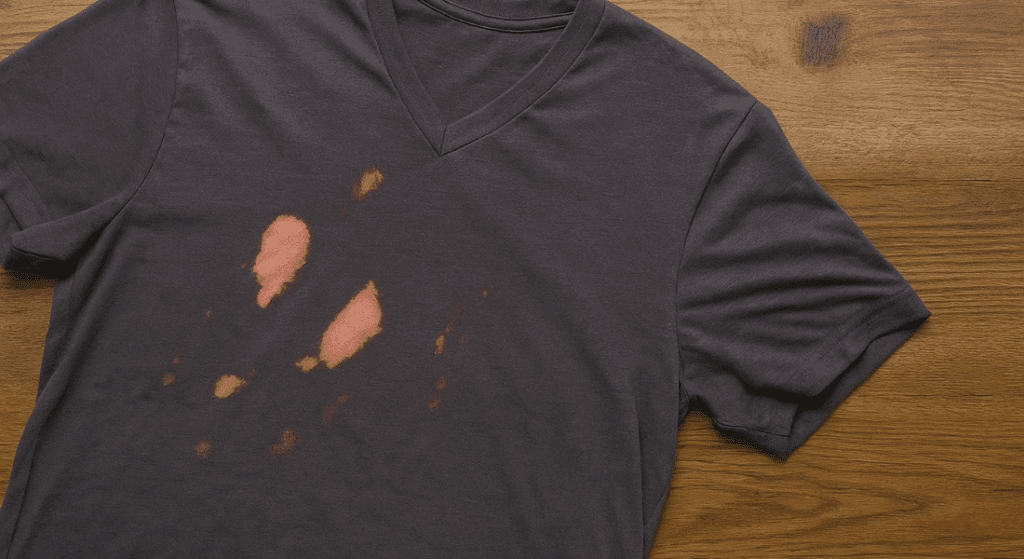
Chlorine bleach can chemically alter or remove fabric dye. That is why a bleach spot on grey clothing may appear white, pink, orange, yellow, reddish, or simply much lighter than the surrounding material.
Once the dye has been removed, ordinary stain removers cannot wash the original color back into the fabric. However, you may still be able to limit fresh damage, disguise a small bleach spot, or re-dye a larger damaged area.
Important safety note: If chlorine bleach has just contacted the garment, rinse the affected washable fabric thoroughly with water and follow the bleach product instructions. Never mix chlorine bleach with vinegar, ammonia, acids, or other household cleaners.
Quick Answer: Can You Remove Bleach Stains From Grey Clothes?
Not in the same way you remove coffee, grease, dirt, or another ordinary stain.
A bleach mark generally means some of the original grey dye has been changed or removed. The practical options depend on when the accident happened and how large the damaged area is:
- Fresh bleach exposure: Rinse away remaining bleach as soon as possible.
- Small bleach spot: A carefully matched fabric marker or fabric dye may disguise the color loss.
- Large or uneven bleach damage: Re-dyeing the entire compatible garment may create a more even result.
If you see a white mark but are not sure bleach caused it, first read our guide to white stains and marks on clothes after washing. Detergent residue, deodorant, lint, and hard-water deposits can sometimes look like bleach damage.
What Causes Bleach Stains on Grey Clothes?
Chlorine bleach reacts with many fabric dyes. Instead of depositing material onto the clothing, it can change or remove color that was already there.
On grey clothes, bleach damage may appear as:
- White spots
- Pink or reddish marks
- Orange areas
- Yellow discoloration
- Light grey patches
- Uneven fading
The exact color depends on the dyes used to create the original grey shade. Grey fabric may contain combinations of different pigments, so bleach does not always turn it simply white.
Are Bleach Stains Permanent?
If bleach has already removed or altered the fabric dye, the resulting color change is generally permanent unless you add color back to the garment.
That means washing the garment again will not normally restore the missing grey dye.
There is an important difference between:
- Residual bleach still present in the fabric — which should be rinsed away according to the product and garment instructions.
- Color that has already been removed — which usually requires a cosmetic repair such as a fabric marker, fabric dye, or complete re-dyeing.
Method 1: What to Do Immediately After Bleach Gets on Grey Clothes
If the bleach spill just happened, focus first on removing remaining bleach rather than trying to restore the color.
- Move away from the bleach source. Prevent additional splashes or exposure.
- Rinse the washable fabric thoroughly with water. Flush the affected area to remove as much remaining bleach as possible.
- Do not add vinegar or another household cleaner. Never combine chlorine bleach with vinegar, ammonia, acids, or other cleaning products.
- Check the bleach product label. Follow the manufacturer’s instructions for spills, rinsing, cleanup, and laundering.
- Check the garment care label. Once the bleach has been thoroughly rinsed away, wash the garment only using a method appropriate for that fabric.
- Inspect the fabric after rinsing and washing. Determine how much of the color has actually changed.
Rinsing can help remove bleach that remains in the material, but it cannot restore dye that has already been chemically altered.
Should You Use Vinegar to Neutralize Bleach on Clothes?
No. Do not apply vinegar to clothing that may still contain chlorine bleach.
Chlorine bleach should not be mixed with vinegar, ammonia, acids, or other household cleaners. If bleach is still present on the garment, the safest general approach is to rinse the washable fabric thoroughly with water and follow the manufacturer’s directions rather than improvising with another chemical.
The same rule applies to other household cleaning combinations: using more chemicals does not restore missing dye and can create additional hazards.
Can Baking Soda Remove a Bleach Stain?
Baking soda cannot restore fabric dye that chlorine bleach has already removed.
Once the grey color is gone, adding baking soda, detergent, vinegar, or a conventional stain remover will not recreate the original dye.
At that point, the remaining options are primarily cosmetic.
Method 2: Cover a Small Bleach Spot With a Fabric Marker
For a very small bleach spot, a fabric marker can sometimes make the damage less noticeable.
This works best when:
- The spot is small.
- The surrounding grey color is relatively uniform.
- You can find a marker close to the garment’s original shade.
- The fabric is compatible with the marker product.
How to Use a Fabric Marker on a Grey Bleach Spot
- Read the marker instructions. Make sure it is intended for the type of fabric you are treating.
- Test the color first. Apply a tiny amount to an inconspicuous area if possible.
- Compare the shade after it dries. Wet fabric marker ink can look different from its final color.
- Build the color gradually. Use light applications instead of heavily saturating the bleach spot all at once.
- Blend carefully. Work only as far into the surrounding fabric as needed to make the transition less obvious.
- Follow the product’s setting instructions. Different fabric markers have different drying, washing, and heat-setting requirements.
Matching grey can be difficult because one grey garment may have blue undertones while another has red, green, brown, or purple undertones.
For that reason, a fabric marker is usually better for a tiny isolated spot than for a large damaged patch.
Method 3: Re-Dye Larger Bleach Damage
If bleach has created a large pale patch or several spots, re-dyeing the garment may produce a more even appearance than trying to color each spot individually.
Before buying dye:
- Check the garment’s fiber content.
- Check whether the dye product is compatible with that fiber.
- Read the garment care label.
- Read the dye manufacturer’s complete instructions.
- Consider whether stitching, prints, logos, elastic, or mixed fibers may react differently to the dye.
Different fibers absorb dyes differently. A product suitable for cotton may not produce the same result on polyester, nylon, spandex blends, or other materials.
Should You Dye Only the Bleach Spot?
Spot-dyeing may work when the damaged area is small and you can closely match the existing grey shade.
However, getting an invisible color match can be difficult because:
- The original garment may have faded from previous washing.
- The grey shade may contain several underlying dye colors.
- The repaired area may absorb dye differently from surrounding fabric.
- The bleach may also have affected the fibers themselves.
If the damaged area is large, dyeing the entire compatible garment a slightly darker shade may create a more consistent appearance.
Can You Reverse a Bleach Stain?
You generally cannot reverse the chemical removal of fabric dye simply by washing or applying a stain remover.
Instead, think of the repair as replacing or disguising the missing color.
Your options may include:
- A matching fabric marker
- Spot dye
- Re-dyeing the entire garment
- Embroidery
- A patch or appliqué
- An intentional redesigned pattern
- Repurposing the garment
What About Bleach Stains on Dark Grey Clothes?
Bleach damage can be particularly obvious on charcoal, slate, and other dark grey garments because there is more contrast between the original fabric and the faded area.
A marker may work for a tiny spot, but larger patches often require a broader cosmetic solution.
When choosing dye or a marker, remember that “grey” is not one universal color. Test the repair product before treating a visible area whenever possible.
Why Did Bleach Turn My Grey Clothes Pink or Orange?
Grey clothing is created using dyes that may contain several underlying colors. When bleach breaks down part of that dye mixture, another color can become more visible.
That is why a grey garment may develop:
- Pink spots
- Orange patches
- Yellow marks
- Reddish areas
This does not necessarily mean another substance stained the clothing. It may simply be the way the fabric dye reacted to bleach.
Bleach Damage on White Clothes vs. Grey Clothes
Bleach-related discoloration should not automatically be treated the same way on white and grey clothing.
Grey clothing: A lighter spot usually indicates that some of the original dye has changed or disappeared.
White clothing: Yellowing or other discoloration can have several possible causes, so identify the problem before applying another treatment.
In either case, do not start mixing household chemicals in an attempt to reverse the damage.
Can You Safely Use Bleach on Grey or Colored Clothes?
Some colored garments may tolerate certain bleach products, while others can be permanently damaged.
Always check:
- The garment care label
- The type of bleach
- The fabric composition
- The bleach manufacturer’s directions
- Whether colorfastness testing is recommended
Do not assume that simply diluting chlorine bleach makes it safe for grey fabric.
For a complete explanation, read our guide on whether you can use bleach on colored clothes.
Do You Need Bleach for Every Laundry Stain?
No. Many common laundry stains should be treated based on what caused them rather than automatically reaching for chlorine bleach.
Oil, grease, coffee, blood, grass, food, sweat, detergent residue, and other stains can require very different treatments.
If you would prefer to avoid bleach, see our guide on how to remove stains without bleach.
How to Prevent Bleach Stains on Grey Clothes
- Read clothing labels before using bleach. Do not bleach garments whose care instructions prohibit it.
- Follow the bleach product directions. Use the correct product, amount, and application method.
- Do not pour concentrated chlorine bleach directly onto colored fabric.
- Keep colored laundry away from bleach splashes. Cleaning a sink, bathroom, or other surface with bleach while wearing favorite clothing can result in accidental spots.
- Wash your hands after handling bleach. Residue on hands can transfer to clothing.
- Check cleaning cloths and towels. Items used with bleach should not accidentally contact colored laundry.
- Use ventilation and protective equipment as directed. Follow the safety instructions on the bleach label.
- Never mix bleach with other household cleaners.
Common Mistakes When Trying to Fix Bleach Stains
- Treating bleach damage like an ordinary stain: Missing dye cannot simply be lifted from the fabric.
- Applying vinegar to fresh bleach: Do not mix chlorine bleach with vinegar or other cleaners.
- Adding more bleach: More bleach can enlarge the damaged area or weaken the fabric.
- Using a marker without testing: The final shade may look different after drying.
- Dyeing without checking fiber content: Different fabrics require different dye products.
- Expecting a perfect spot repair: Grey shades can be particularly difficult to match.
- Ignoring fabric damage: Bleach exposure may affect more than color. Check for weakened fibers before spending time re-dyeing an item.
When Might a Garment Not Be Worth Repairing?
Repair may not be practical when:
- The fabric has become thin or weak.
- The bleach damage covers a very large area.
- The item contains several different fibers or finishes.
- The garment is valuable or delicate and a DIY repair could make the damage worse.
- A matching color cannot reasonably be achieved.
In those situations, repurposing the garment or turning the damaged area into an intentional design may be more realistic.
Ideas for Repurposing Clothes With Permanent Bleach Damage
If the original appearance cannot be restored, you may still be able to reuse the garment.
- Add embroidery over the damaged area.
- Cover it with a decorative patch.
- Create an intentional design if the fabric is suitable.
- Convert an old shirt into cleaning cloths.
- Use usable fabric in another sewing project.
Do not intentionally add more bleach unless the fabric permits bleaching and you understand how to use the product safely.
Need Help With Washable Laundry in Clarksville?
If a bleach spill has already removed color from your clothing, ordinary washing cannot recreate the missing dye. The Dutchman’s Laundry does not need to be positioned as a dye-restoration service for that type of damage.
However, once a washable garment has been safely rinsed and is suitable for regular laundering, you can use our drop-off wash and fold service in Clarksville for ordinary laundry.
You can also use our self-service laundromat in Clarksville if you prefer to handle the washing yourself.
For valuable, delicate, dry-clean-only, structurally damaged, or specialty garments, confirm the appropriate care or repair option before putting the item through a normal laundry cycle.
Summary: How to Fix Bleach Stains on Grey Clothes
- Bleach stains on grey clothes are usually areas where fabric dye has been altered or removed.
- If the bleach exposure is fresh, rinse washable fabric thoroughly with water and follow the product directions.
- Never mix chlorine bleach with vinegar, ammonia, acids, or other household cleaners.
- A small bleach spot may sometimes be concealed with a carefully matched fabric marker.
- Larger areas may require re-dyeing the entire compatible garment.
- Check fiber content and product instructions before using fabric dye.
- Grey clothing may turn pink, orange, yellow, white, or another lighter shade after bleach exposure.
- Once dye is removed, ordinary stain removers cannot wash the original color back into the garment.
Frequently Asked Questions About Bleach Stains on Grey Clothes
How do you remove bleach stains from grey clothes?
A bleach stain usually cannot be removed like an ordinary stain because bleach may have removed the original fabric dye. For a fresh spill, rinse the washable fabric thoroughly. Once color loss has occurred, a fabric marker, fabric dye, or full-garment re-dye may be needed to disguise the damage.
How do you fix a bleach spot on grey clothes?
For a small spot, a fabric marker that closely matches the garment may make the damage less noticeable. Test the marker first because grey shades and undertones vary. Larger spots may be better addressed by re-dyeing the entire compatible garment.
Can you reverse a bleach stain?
Washing cannot normally reverse dye that chlorine bleach has already removed. The practical solution is usually to add color back, cover the damaged area, redesign the garment, or repurpose it.
Why did bleach turn my grey shirt pink?
Grey fabric can contain multiple underlying dye colors. Bleach may break down some pigments faster than others, exposing pink, orange, yellow, red, or another tone.
Why did bleach turn my grey clothes orange?
Orange discoloration can occur when bleach changes part of the dye mixture used to create the original grey shade. It is usually color loss or alteration rather than an orange substance deposited on the fabric.
Does diluted bleach still damage grey clothes?
It can. Dilution does not automatically make chlorine bleach safe for every colored fabric. Check the garment care label and bleach product instructions before use.
Should I use vinegar on a bleach stain?
No. Do not combine chlorine bleach with vinegar or other household cleaners. If fresh bleach has contacted washable fabric, rinse it thoroughly with water and follow the bleach manufacturer’s instructions.
Can baking soda reverse bleach damage?
No. Baking soda cannot replace dye that chlorine bleach has already removed from a grey garment.
Can fabric dye cover bleach stains?
It may. The result depends on the garment’s fiber content, the size of the damage, the dye product, and how closely the new color matches the original fabric. Follow the dye manufacturer’s instructions carefully.
Can a fabric marker fix a bleach spot?
A fabric marker can sometimes disguise a small bleach spot, particularly on a uniformly colored garment. Test the shade first and build the color gradually.
Are bleach stains permanent?
The color loss caused by bleach is generally permanent unless color is added back through a cosmetic repair such as dye or a fabric marker.
Can I wash a bleach stain out?
Washing can remove remaining bleach or residue when done appropriately, but it cannot restore fabric dye that has already been chemically removed.
How can I prevent bleach spots on grey clothes?
Follow garment care labels, use bleach only as directed, avoid direct contact between concentrated bleach and colored fabric, protect clothing while cleaning, and never mix bleach with other household cleaners.
Written by
TDL Team
The laundry professionals behind The Dutchman’s Laundry in Clarksville, TN. We share practical laundry tips based on the questions and laundry problems our team sees every day.